
Gutter Cleaning Fulham
If water is dropping onto the roof of a side return, we start by finding which gutter feeds it. The lower roof can have its own obstruction, while a downpipe from the main roof can make it overflow even when its channel looks clear. We clean the runs agreed for the visit and check reachable outlets. Tell us what happens at the rear and whether we can bring equipment in through the garden or side passage.
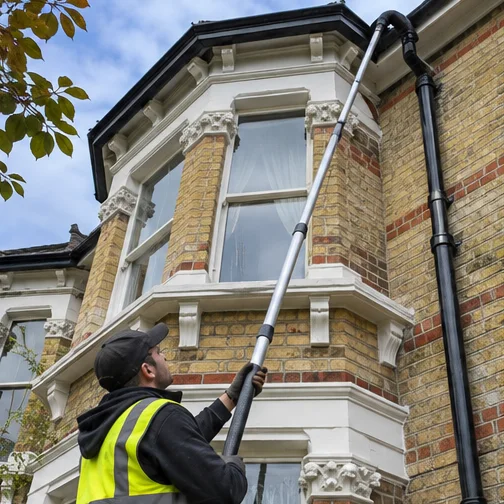
Illustrative photograph.
Set up without relying on the extension roof
We look for a position from which the pole can reach the channel while the operator works from suitable ground. The useful measurement is often the distance from the garden or path to the gutter, as well as its height. A deep extension may put the channel farther away than a picture of the front suggests. If the passage widens near the back, tell us where that happens and what can be moved to keep the route clear.
When access is shared, the person who gives us the gate code or key may be different from the person who can agree the work. Let us know whom to contact for each. If the only route is through the house, tell us about steps, changes of level and any restrictions on bringing in the vacuum. A visit for a front channel alone can be arranged separately from a rear run that needs different access.
- Show where the upper pipe discharges onto the extension.
- Tell us if the lower gutter has an independent outlet.
- Describe the passage width, turns and any steps.
- Identify the corner you want to see on camera.
Trace the upper and lower runs separately
A terraced house can have a main gutter facing the garden and a shallower channel along the roof of a rear addition. When the upper downpipe discharges onto the lower roof, the lower channel handles water from both areas. We ask where the water first builds up. If rain begins running down a wall near the end of the extension, we look for a blocked outlet there as well as any overflow from above. If the same corner leaks after the channels are clear, we discuss which fitting needs a closer look.
Hammersmith & Fulham publishes conservation area descriptions for parts of Fulham, including residential streets with terraces. The gutter arrangement still depends on the house and later alterations. Send a picture of your extension and the main roof behind it, if both are visible from the ground. Where there is a rooflight, sloping glazing or a canopy below the gutter, include that in the frame.
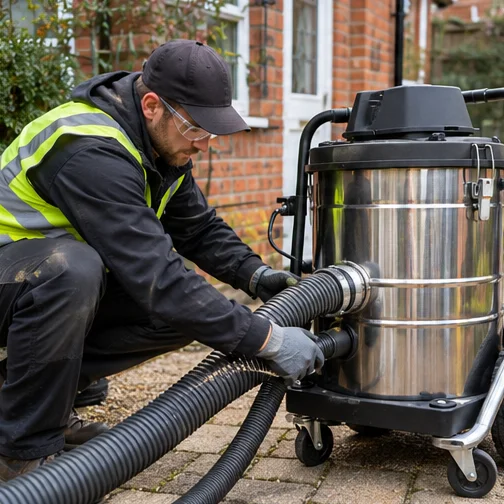
Which roof should we look at first?
| Where water appears | First check | What affects the visit |
|---|---|---|
| Along the outer side of the extension | Lower channel and its outlet | Space to reach the outer edge |
| Under an upper pipe that ends on a lower roof | Upper discharge and receiving gutter | Access to both levels |
| At the end of a short return | Stop end and debris near the corner | Whether the seam leaks once clear |
From silt in the corners to a clear outlet
We use a gutter vacuum on suitable runs to lift leaves, moss and the heavier material that sits at the bottom. At a change in direction we check for compacted debris that may be left behind when the rest of the run looks clear. We work along each accessible length agreed at booking and look at the opening into the downpipe. If a lower gutter receives a pipe from above, we check that connection where we can reach it.
A camera can help us see a corner obscured by the roof edge. We discuss the camera check if you want a view of a specific section or if the shape of the roof prevents a clear view from the garden. At the end we tell you which runs were cleared and identify any reachable opening where a blockage was removed. If there is still a restriction farther into the pipe, we explain what we found and what would need further assessment.

Share the detail that helps us quote
For a Fulham terrace, tell us which side of the extension has an outlet and whether the main downpipe is visible. If you manage a converted house, identify which flat has the view of the affected gutter and which occupier controls the garden. At business premises, tell us whether access to a rear yard is through a shared delivery route. We need to know where equipment can stand and whether the person on site can show us the affected run.
You can send a short video of the overflow taken from a safe position. If you only have a photograph after the rain, show the full elevation and indicate where the water fell. Tell us whether the extension gutter was cleared recently, whether the upper run was included and what happened afterwards. Those details help us distinguish a visit to clear one run from a visit to investigate several linked outlets.
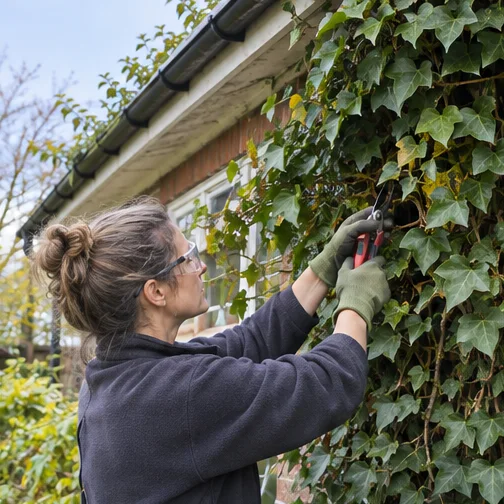
When upper and lower gutters need separate attention
If a roof alteration has added a second gutter, tell us which parts were installed together. We often need to see a wider view to tell whether two channels are joined or merely sit close together. An upper pipe may end beside the rooflight without discharging into the gutter you first reported. A picture taken from the rear boundary, where possible, can show that relationship and help us discuss what to include in the visit.
At the end of a visit involving two levels, we can explain the findings separately. If an upper outlet was cleared but a lower seam still leaks, you will know which part was worked on and which needs a different assessment. If a rear corner could not be reached, we say which position would need to be considered before a return visit. For a landlord, that makes it easier to tell an occupier what was done without promising work to a roofline that was outside the booking.
Tell us if the original report mentioned water splashing on glazing, as well as where it was seen on the wall. The path may be easier to understand if you describe the first few minutes of rain before several surfaces are wet. If there is a joint at the end of the run that has already been sealed, send a picture of it and tell us whether the leak changed after the repair.
What happens if an extension gutter still leaks?
A cracked stop end can drip in light rain, while a restricted outlet may only show up when the channel is carrying more water. If a seam still leaks after clearance, ask us about repairing the connection. Where several sections have become brittle or lost their shape, we can look at renewing the affected run. If you have a concealed channel over an addition, we can discuss lining after inspecting its support and outlet.
Ivy can hide the pipe behind an extension or grow into an opening where it joins the gutter. If you want it cut back, tell us how far it extends and what you want left in place. Where water has already marked a ceiling or wall, water damage assessment is a separate discussion. See our gutter cleaning service for the usual work covered by a clearance visit.
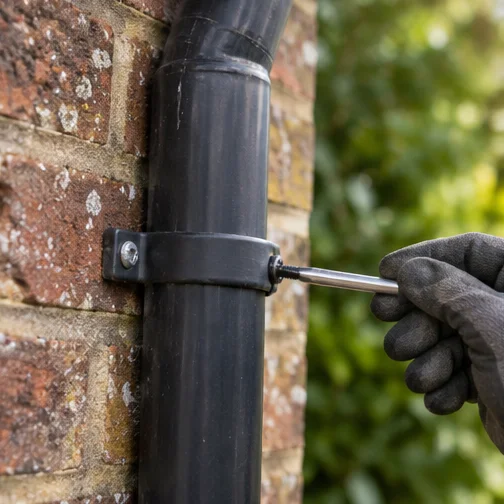
Plan the rear access
| Route | Tell us about | Detail that changes the plan |
|---|---|---|
| Side passage | Narrowest point and where it opens | Can the equipment stand in the garden? |
| Through the house | Steps and who will open the door | Which route is available on the day? |
| Shared yard | Deliveries or other users | Who can agree a suitable time? |
Other work on the extension and roofline
Gutter cleaning
We can include both levels of an extension if each run is accessible and agreed at booking.
Gutter replacement
We discuss renewing brittle lengths along a rear addition and how they meet the existing downpipe.
Guttering repairs
A leaking end or joint may need its own repair after the lower outlet has been cleared.
Ivy removal
We can discuss cutting back growth that hides the pipe or obstructs access at the back.
Gutter lining
If a sound concealed gutter at the extension has a failing surface, we can look at its corners and outlet for lining.
Water damage repair
If the ceiling under an addition shows damp, we discuss the affected surfaces and whether the source has stopped.
Coverage and bookings
See the areas we cover. For nearby enquiries, see Chelsea.
Fulham booking questions
Will you clean the gutter above the rooflight?
Tell us the distance from the garden and which edge of the rooflight is below the gutter. We look at the working position before agreeing to include the run.
Can one blocked pipe make both gutters overflow?
It can if one run drains into the other. We check the reachable connections and discuss what remains if the lower outlet still backs up after clearance.
What if I can only reach the front of the house?
We can discuss a front visit on its own. Tell us whether there is a later opportunity to reach the rear and whether the two runs use separate downpipes.
Why does the gutter leak over the kitchen door?
The drip may start at a nearby seam, at the corner or farther up the roofline. Show us the location and when it occurs so we can check the relevant section.
Do you need the tenant there for a rear visit?
We need whoever can give access. If you will approve the work remotely, give us a number to use if a fitting needs separate attention.
Can you see what was in the hidden corner?
Ask about a camera check when you book. We can discuss what views are possible from the available working position and which part of the channel you need to see.