
Gutter Cleaning Clerkenwell
We clear reachable gutter runs in Clerkenwell and check accessible pipe openings. If you are reporting a leak from an altered or converted building, tell us what part of the roof appears to feed it. A newer roof can sit beside an older channel without draining into it. We use the location of the first spill and the available working position to agree the lengths to include.
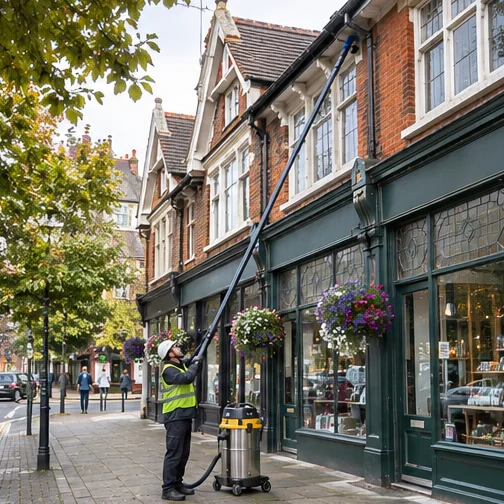
Illustrative photograph.
Identify which part of an altered building is still connected
Islington’s conservation guidelines for Clerkenwell Green and neighbouring areas describe a close mix of older buildings and premises with workshop, manufacturing and other uses. When buildings are adapted, the roof drainage at a particular address depends on what was retained and what changed. If the gutter you want checked is near the junction of two parts of the building, tell us what you can see of the pipes and roof edges. An extension may have its own outlet. The older gutter could discharge to another side. A photo showing the change in roof height is more informative than an address or a close-up alone.
Tell us whether water first appears at the joint between two roof sections, at an opening into a pipe or lower down beside a doorway. The visual change from brickwork to newer cladding or from one roof height to another can be a helpful reference. Do not assume that the joint between the building materials is the source of the leak. Water can be carried to that point by a gutter or fitting above it. We can discuss where to start if you tell us which part gets wet before the surrounding surfaces do.
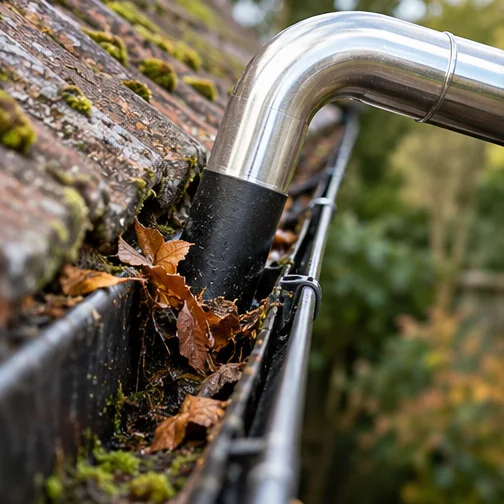
Describe the result using the junction and roofline as references
After clearance we tell you which runs were reached, which openings were checked and whether an accessible fitting still appears to need work. If two parts of the building were involved, we describe them separately so the person arranging follow-up can identify the right connection. If part of the channel was beyond the working position, we explain which length still needs access. An account of what we could see at the junction may help distinguish a local fitting issue from work on the larger roof.
For a later enquiry, tell us if anything has changed in the yard or if another contractor has worked on the roof edge since the visit. Give us the reference you use for the older and newer parts. If the spill has moved to a different position, describe where it now first appears. This helps distinguish a repeat restriction from a new fault. Where the job has moved from clearance to repair, explain which fitting was identified and who can approve further work.
Agree how equipment reaches the side that needs attention
The ground beneath the relevant section may be on the street side, within a rear yard or in a space between two parts of the property. Give us the route to that position and tell us who controls it. If equipment has to pass through a corridor or service door, describe any turns and changes in level. A door opening into the yard may still be in use during the appointment. Tell us which routes need to be kept available and whether the work can be approached from another side. We consider the working position before agreeing what can be reached.
If more than one occupier uses the rear, identify who can provide access and who can confirm the work. At a converted building, the person looking after the interior may not be the person responsible for an older rainwater fitting outside. Let us know who should receive the findings if we see a defect. For a home or flat, explain how the outside position can be reached and whether the occupant needs to open it. We can discuss the included run with the person booking and the practical route with the person who can give access.
- Show both roof edges if the spill is near their junction.
- Distinguish an old channel from a newer run on an addition.
- Give the yard access contact for the affected side.
- Tell us where water first appears along the connection.
Access and contacts for a converted premises
| Approach | What to confirm | Why it helps |
|---|---|---|
| Street frontage | Available ground below the original roof | Establishes the approach to the upper run |
| Shared rear yard | Occupier who can agree use of the area | Confirms working space below the addition |
| Internal route to the yard | Doors, turns and steps | Shows what equipment can be brought through |
Check the outlet without assuming both roofs drain together
At the visit we confirm which lengths were agreed and locate the accessible openings. Where the gutter and working position allow it, we use a vacuum and reach poles to clear material from the run. Leaves, moss and fine debris can collect where a narrow channel changes direction or meets its outlet. We work along the accessible length and clear reachable obstruction at the opening into the pipe. If we can see a separate gutter on the addition, we check whether it was included rather than assuming it forms part of the same run.
A camera may help to see debris or a fitting behind a roof edge. Ask about the view if a property manager wants to see how two sections join. The working position and roof shape determine what can be shown. A pipe behind a wall or an outlet beneath the ground is outside that view. If water seems to remain in the channel after debris is removed, we tell you where it was visible. If a restriction appears to be beyond the accessible part, we describe what may need a separate check. See gutter cleaning for more about the equipment and the limits of a normal clearance visit.
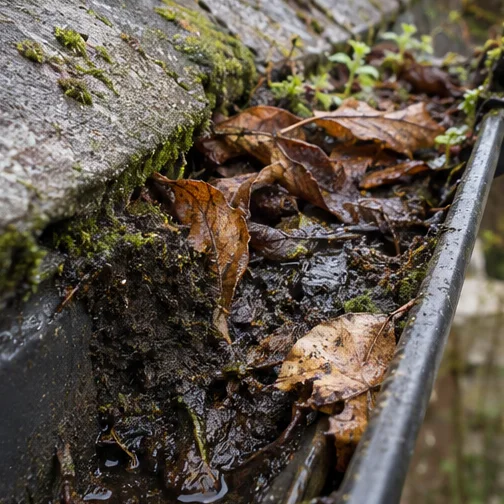
Separate work at the premises
Gutter cleaning
We clear the reachable original or newer runs agreed at booking and check each accessible outlet.
Ivy removal
Tell us if growth prevents a view of the fitting at the junction.
Guttering repairs
We look at the reachable seam or support where water remains visible after clearance.
Water damage repair
For moisture inside an altered building, give us the room and the part of the property it belongs to.
Gutter replacement
We consider how a replacement section would meet a different existing profile.
Gutter lining
We assess a supported channel, its surface and the junction with the roof before discussing lining.
Read water around a change in roofline
| First visible sign | Reachable check | Detail to provide |
|---|---|---|
| Water appears where an addition meets the original wall | Accessible outlets on both sides of the junction | Which side first becomes wet |
| A short gutter spills above a yard door | Opening and any discharge from the upper roof | Height and position of each roof edge |
| A pipe joint drips below the change in material | Visible connection and gutter above | Which part of the pipe remains accessible |
Consider the original and newer fittings separately
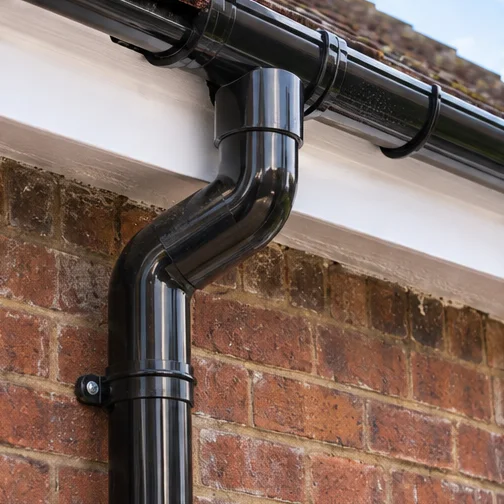
A joint can stay wet after the gutter is clear if the parts have shifted or a support has moved. We can discuss a repair to the accessible fitting if there is a visible local fault. Where a length has failed, we consider how replacement guttering would join the existing profile. An older supported channel may have a surface that can be assessed for lining rather than renewed as a whole. The condition at the outlet and where the channel meets the roof matters to that assessment.
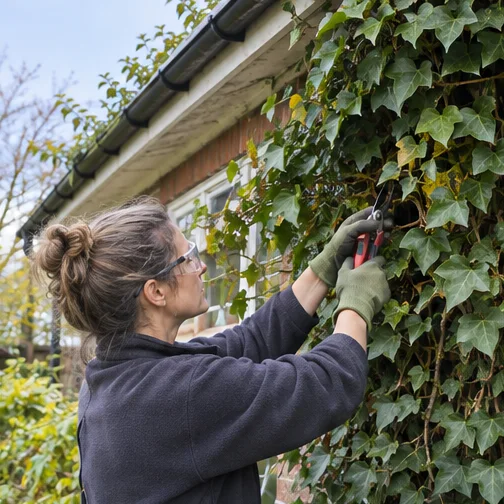
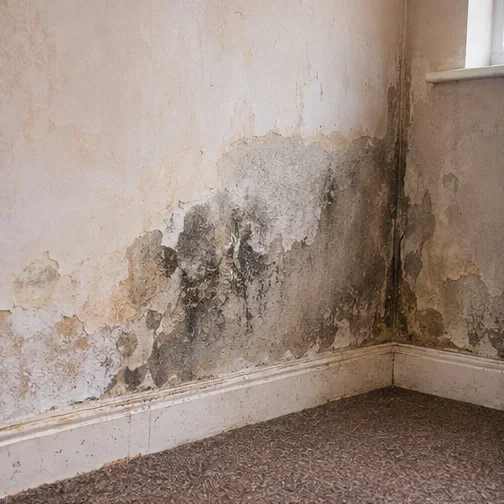
If growth hides the connection on the side wall, tell us where it starts and which fitting needs to be seen. We can discuss cutting back the relevant ivy if access can be agreed. Where water has reached an interior wall, describe which room is affected and if it is within the old building or the newer addition. We can consider water damage repair separately from clearing or repairing the gutter. A wet mark near a junction does not by itself establish the route into the building. We can discuss what further inspection may help to establish it.
What helps when several people report the leak
Coverage and bookings
See the areas we cover. For nearby enquiries, see Holborn and Angel.
Questions about Clerkenwell gutter work
Can you clear the gutter on a newer addition without touching the older one?
We can discuss that if the run is accessible and can be identified separately. Tell us how it drains and whether the upper gutter discharges into it.
Will you tell us if the pipe connects the two roofs?
We check what can be seen of the channels and accessible connections. If the route is concealed, we explain which part would need a separate inspection.
Can one occupier arrange a shared rear visit?
They can make the enquiry. Tell us who has agreed access and who can approve work to the relevant gutter if those responsibilities sit elsewhere.
Does a leak at the junction mean the newer gutter is blocked?
It may have a blockage, but water can reach the junction from another run. Tell us which part wets first so we can discuss what to check.
Can you identify an older gutter profile from a photo?
A clear image may help us understand the visible shape. We consider the fitting and adjoining lengths when discussing a repair or replacement.
What if the yard is only available for part of the day?
Give us the available times and details of the working position. We can discuss what may be reachable during the appointment.