
Gutter Cleaning Cheam
We clear gutter runs and check reachable downpipe openings in Cheam. If water pours from a corner only when rain is heavy, tell us whether it starts over the edge of the channel or at a visible joint. Give us a picture of the corner and its nearest outlet. We can discuss which lengths to include and whether the ground below offers a suitable working position.
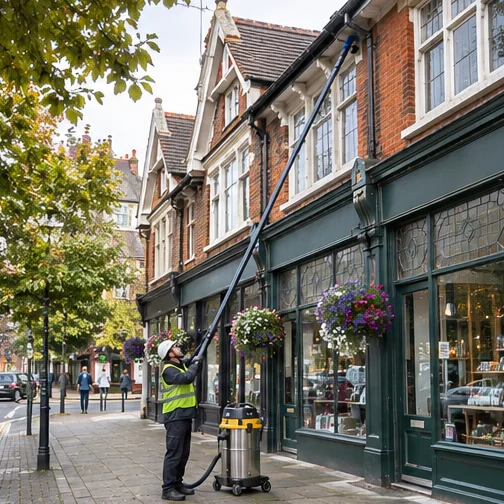
Illustrative photograph.
Check whether the corner can be approached from two sides
One side may offer a level drive while the other is reached by a narrow gate. If the roofline continues round the turn, tell us where the working space ends on each side. Show any porch roof, planted bed or fence that limits how close we can stand. We can discuss where the vacuum and reach poles could be used, and whether the whole run can be reached from the available ground.
At a property with a garage joined to the house, describe how the side wall and roof sit in relation to each other. The garage may have its own gutter and restrict access to the higher run. If you are arranging the visit for someone else, give us the name of the person who can open the side gate. At premises with a shared path or yard, tell us when the route can be used and who agrees that access.
- Show the outlet and both sides of the gutter turn.
- Identify a garage run that drains independently.
- Describe the working space on each side of the house.
- Mention a previous corner repair if the drip has returned.
Show how the gutter turns at the corner
A gutter on a house may run across the front and continue down the side. If water first appears at the turn, tell us whether the outlet is on that corner or farther along. A picture showing only the drip can make a joint look like the cause when the channel is backing up from an outlet beyond it. We ask for a wider view to see how the visible pieces connect.
If a second length on a porch or extension joins the system near that point, include it in the description. It might have a separate opening or receive water from another roof. Say if the overflow always starts at the same place or moves along the edge in prolonged rain. That information helps us decide what needs to be inspected before agreeing the work.
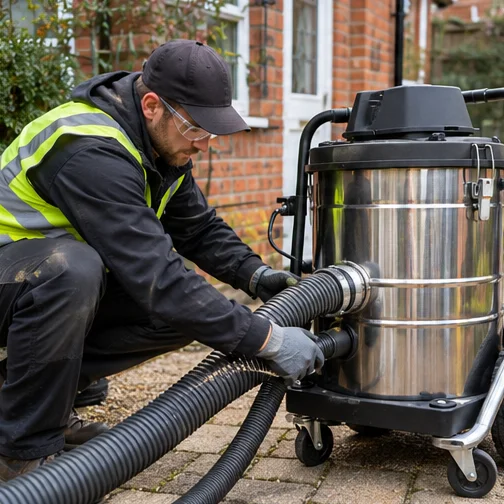
Identify where the corner starts to leak
| What you notice | Detail to send | First check |
|---|---|---|
| Water spills along both sides of the turn | Which side starts first | Accessible channel and nearest outlet |
| Drip at a single corner seam | Position of the seam and when it drips | Visible fitting after clearance |
| Water lands on the garage roof | Where the upper pipe ends | Which roofline feeds the lower channel |
Clear the accessible lengths on both sides of the turn
Where the working position suits the equipment, we use reach poles and a gutter vacuum to collect leaves, moss and compacted debris. We work along the agreed channel and around the accessible corner, then check the opening into the downpipe. Debris can gather against the edge of a joint or lie flat in the bottom of the gutter. We check the accessible length instead of judging it from the cleanest patch in view.
If we find material around the opening, we remove what can be reached and look at what is visible of the connection. If a restriction appears to continue inside the pipe, we explain what needs separate investigation. Ask about a camera check if the corner is obscured or if you want a view of a seam that has been repaired before. We discuss what the angle and working position are likely to show.
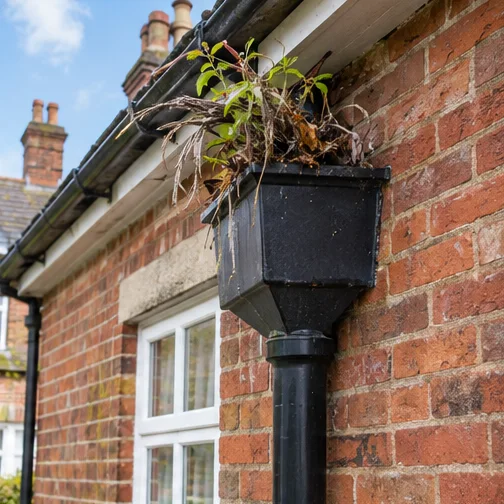
Record both the location and the type of leak
After the visit we describe which lengths and openings were reached and where we removed visible material. If a corner seam appears to need attention, we can refer to it by the elevations it joins. That helps a resident or owner identify the part when deciding whether to arrange further work. If one side could not be reached, we explain where the working space was restricted.
Send the Cheam postcode, roof height and the route to both sides of the corner. A brief note about when water first appears is useful, particularly if a smaller shower produces a drip but a longer spell causes the gutter to spill. If the downpipe turns around the corner before it reaches the ground, show its visible route. Where the property has several outlets, tell us which one seems to carry the reported run.
If a previous repair has changed the corner fitting, tell us which piece was replaced or moved. An old picture can help identify the transition to the remaining gutter if the current picture only shows the new part. Say if clearance was attempted after that work and which sides were reached. That gives us enough context to discuss both debris and the visible connection.

When upper and lower gutters need separate attention
For a small return that is difficult to see, tell us what sits at either end. A downpipe may be visible on the side even though the first drip appears above the front. A photograph taken before the rain begins can help identify the fitting and its supports. When a later picture shows the overflow, we can compare the location with the run we discussed at booking.
If one side of the corner is higher than the other, give us a photo of the path on both sides. The angle at which water becomes visible does not necessarily show which working position will give us the best reach.
Decide what the corner needs after clearance
If the seam continues to leak after the outlet is clear, we can discuss repair to the affected corner. We look at the surrounding support and explain what is visible of the fitting. If a longer length has failed at several points, replacement of the affected sections may be appropriate. We can discuss where the new length would meet the existing turn or outlet. A suitable sound channel with a failed inner surface can be assessed for lining.
If ivy hides the connection near the corner, tell us where the growth starts and what you want cut back. We can discuss that work separately. If water has reached a ceiling or inside wall, water damage assessment is a separate visit to discuss. Identify the surface and its location in relation to the exterior. Our gutter clearance page explains the usual work and how we report a visible problem.
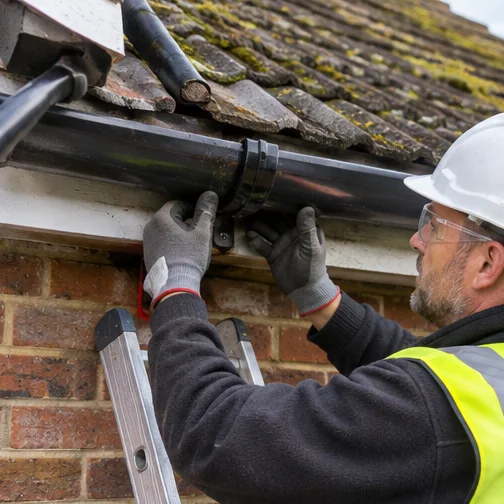
Describe the working ground around the turn
| Access point | What to mention | What we consider |
|---|---|---|
| Open driveway | Space between the wall and parked vehicles | Reach to the front length |
| Side passage | Gate and narrowest point | Route for the equipment |
| Garden behind a garage | Roof projection and nearest level ground | Reach to the return and upper run |
Other work on the extension and roofline
Gutter cleaning
Check the accessible straight length and return before clearing the opening.
Gutter replacement
Discuss where a replacement section would end and how it meets the existing gutter.
Guttering repairs
Look at the corner seam and support once accessible debris is removed.
Ivy removal
Consider cutting back growth that hides the pipe or turn.
Gutter lining
Assess a sound concealed channel where it joins the turn before discussing lining.
Water damage repair
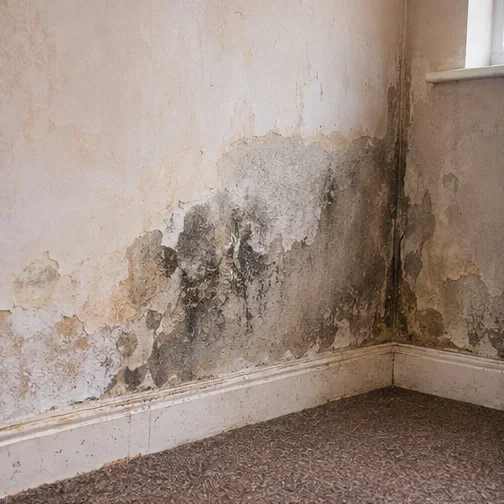
Assess indoor staining separately once the path of the water has been considered.
Coverage and bookings
See the areas we cover. For nearby enquiries, see Sutton.
Cheam booking questions
Can you clear the straight run but leave the return?
Yes, if we agree the length and its outlet. Tell us if the return feeds the same opening, since a blockage there may still affect the straight section.
Why does the corner only leak in a downpour?
The channel might be filling because water cannot reach or pass the outlet, or a joint may leak when water reaches it. We inspect the accessible parts to establish what can be seen.
Can you check both sides from the driveway?
It depends on the roofline and the working position. Show where the drive stops in relation to the turn and whether another route is available.
Can the camera show the joint from inside the gutter?
Ask about a camera view and identify the corner. The available angle depends on the shape of the gutter and where the equipment can stand.
Is a garage gutter included automatically?
No. Tell us if the garage has a separate run and where it drains so we can discuss including it.
What if the corner has already been replaced?
Tell us what was changed and where the water now appears. We can check for reachable debris and assess the visible connection separately.