
Gutter Cleaning Battersea
If a courtyard stays wet during rain, it can be difficult to tell whether water comes from an upper gutter, a balcony or the surface of the yard. A shop entrance can present a similar puzzle when a canopy catches runoff from the wall. Glen’s provides gutter cleaning in Battersea for accessible rainwater systems. Tell us where the water first becomes visible and how you reach the affected wall. A photo showing the nearest roof edge and the ground beneath it can help establish which part of the system to consider.
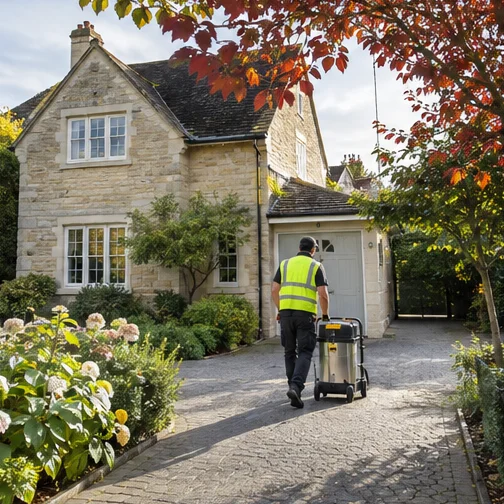
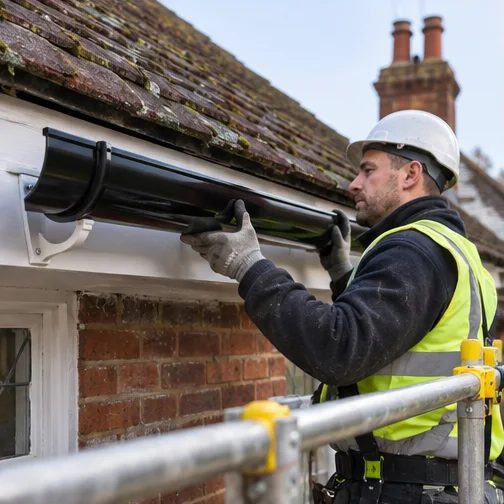
Illustrative photograph.
Check the working route through the courtyard
An open courtyard does not necessarily provide a clear position below every gutter. A balcony or cover can extend over the area beside the wall, while a central route might sit too far back for a particular length. Send one view of the space from the entrance and another facing the affected wall. Include any gates, steps or narrow turns on the way. Where the route is shared, explain when residents, deliveries or other services use it and name the person who can agree the necessary access.
At a house, the front and rear may have different heights and approaches. A rear addition can obstruct the line from the garden to the upper eaves. A side passage might run down steps or become narrower near a fence. Tell us how the route is reached and who can open it. Where a garden belongs to one flat, the person who authorises work on the shared gutter may need to arrange entry separately. The booking should include the agreed route, not only the person reporting the leak.
- Battersea Square and corner elevations
- Courtyard approaches beneath balconies
- Canopy and extension outlets
- Fixed references for management records
Identify the elevation within the block or street
Wandsworth’s Battersea Square conservation area appraisal describes the settlement around the Square and along Westbridge Road, Battersea High Street and Vicarage Crescent. At a nearby property, give the specific frontage or courtyard wall as well as the postal address. A roof can turn around a corner and drain into a side pipe. The affected door might sit on the Square while the outlet is on another elevation. A photograph that includes both walls can help locate the roof edge and the nearest visible connection.
For a block or converted building, give the entrance and upper window closest to the report. Different residents can refer to the same courtyard by different names. Use a fixed feature such as a staircase, service door or corner of the wall. If an occupier saw the first wetting from above and someone else saw it reach the ground, include both observations and give the time. This can show how water crosses a ledge, canopy or balcony on its way down.
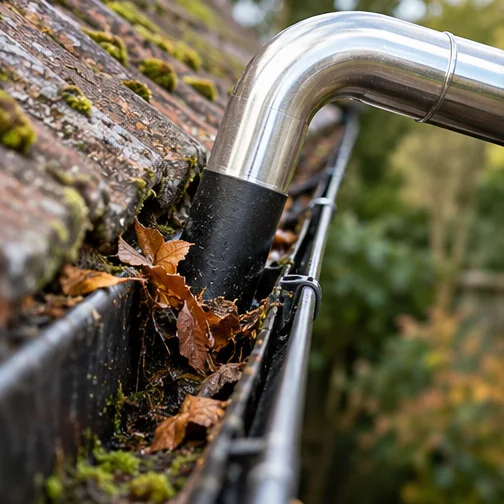
Battersea observations to provide
| Where water appears | Detail to send | What it helps identify |
|---|---|---|
| Wall beside a courtyard door | First wet point and nearest balcony, hopper or pipe | Locates the relevant roof edge or fitting |
| Water crossing a shop canopy | Where water first reaches the cover | Shows how it moves before reaching the doorway |
| Spill at an extension edge | Whether a higher pipe ends on that roof | Describes the possible connection between levels |
| Wetting near the base of a pipe | Whether an open gully or concealed entry is visible | Shows the last part of the discharge route that can be seen |
Look for the first change in the path of the water
Water that lands on a lower roof can travel to its far edge before it becomes visible from the ground. If an upper pipe discharges onto that roof, show where it ends and where the lower gutter empties. A spill from the lower channel may be related to its own outlet or the amount of water it receives. Observe from a safe position and note whether water first appears at an exposed joint, comes over the edge or arrives from a roof above.
During gutter cleaning, we clear agreed accessible channels and visible openings. A ground-based vacuum may be practical where the position gives enough room and a suitable line to the gutter. A camera can sometimes show debris at an outlet or corner. At the base of the pipe, note whether it empties above a gully or passes into paving. Water on the surface of the yard can reach the same point from another direction. If a pipe enters a concealed route, it may need a separate inspection.
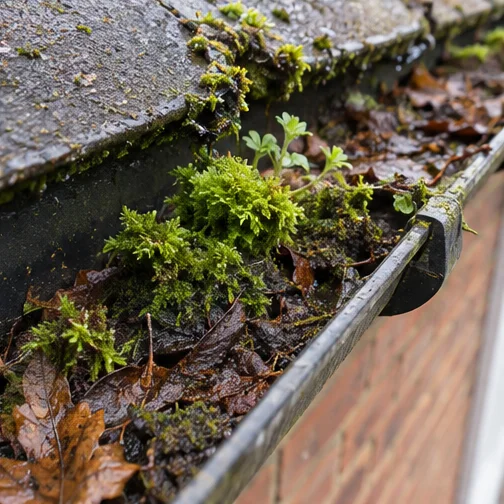
Give the next inspection a recognisable reference
A visit record can identify the accessible lengths, where material was removed and any visible issue needing attention. Choose a location that a property manager can find without relying on a tenant’s name or shop sign. For example, refer to the first hopper beyond the courtyard door or the gutter above the window next to the back steps. If another position is needed, the record can identify the part that remains and the person who can arrange access.
When it next rains, check whether water first becomes visible in the same place. A larger spill may stop while a drip continues at a lower joint. Record both positions with the approximate time after rain began. If a ceiling or wall mark changes indoors, describe the room and nearest exterior feature. A dated photograph from the same safe position can help distinguish a fresh wet area from earlier staining. The building contact can share the new observations with the clearance record when arranging further assessment.
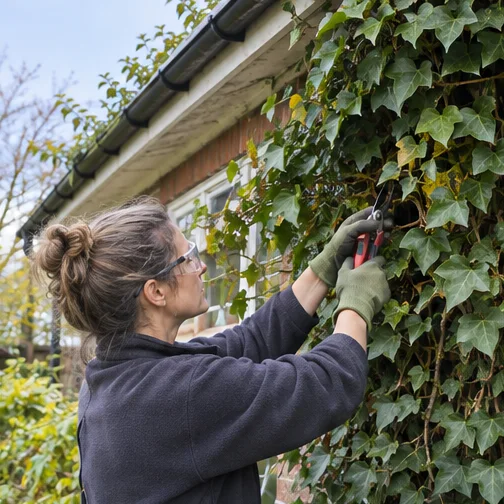
When upper and lower gutters need separate attention
Consider the fitting and the condition of its support
A local drip may continue after loose material is removed from an accessible channel. If water stands close to the seam, the channel fall, outlet and neighbouring supports can all affect the visible symptom. Guttering repairs can be assessed where the adjoining lengths and fixing surface are suitable. Provide a record of any earlier change to the profile, pipe or outlet. At a roof that has been extended, a newer fitting may connect to an older length. The shape of both is relevant to what can be retained.
A channel may be considered for lining where it has suitable support and workable details at the corners and outlets. Gutter replacement may warrant discussion where several lengths or brackets have deteriorated. If climbing growth crosses a pipe or reaches under the roof edge, explain which fixings and surfaces it covers before arranging an ivy removal assessment. Water damage repair depends on understanding the entry route and the affected material. Note when an interior mark first appeared and whether you can locate the nearest outside feature.
Access to agree around the building
| Setting | What to confirm |
|---|---|
| Corner frontage near Battersea Square | Which wall is affected and the position of its outlet |
| Shared courtyard with several doors | Access contact, door use and obstructions above the route |
| Rear garden reached past an extension | Narrowest point and any steps or overhead cover |
| Flats above a private garden | Who grants entry and who agrees the roof work |
Other work on the extension and roofline
Gutter cleaning
Clear agreed accessible channels and openings above courtyards, frontages and rear additions.
Gutter replacement
Review renewal options where several sections or brackets have deteriorated.
Guttering repairs
Consider a visible seam or support with the surrounding gutter and fixing surface.
Ivy removal
Assess stems that obscure brackets, pipe joints or roof-edge details.
Gutter lining
Assess whether existing support and outlet connections suit a liner.
Water damage repair
Compare dated indoor observations with exterior wetting to guide further assessment.
Coverage and bookings
See the areas we cover. For nearby enquiries, see Wandsworth and Clapham and Chelsea.
Questions about gutter cleaning in Battersea
Can an open courtyard give access to a gutter above a balcony?
It depends on the height, balcony projection and available position. A photograph showing both the wall and the ground helps. Tell us if another route can reach the side of the building.
What if the affected gutter faces a different street from the main door?
Give both the address and the elevation facing the affected side. Include the nearest window, door or pipe. Confirm which entrance the team should use and who can open it.
Why does a courtyard puddle appear away from the pipe?
The paving may carry water across the yard from the pipe, a roof edge or another surface. Record where you first see it moving. If the relevant connection goes below paving, it may need a separate inspection.
Can you consider a canopy gutter and the higher gutter together?
Yes, where both are included in the agreed work and reachable. Show whether the canopy has its own outlet or receives water from above. A suitable position for the lower gutter may differ from the one needed for the higher edge.
Should I share records from a previous fitting replacement?
Yes, if they identify the fitting and its position. Include a current view and say where the leak appears. The comparison can help locate a problem at the changed joint or elsewhere along the run.
What can a building manager ask residents to record after the visit?
Ask for the first wet point, approximate timing and a fixed door or window as a reference. A photo from a safe position may help. Compare the observation with the sections named in the clearance record.