
Guttering Repairs in London
We repair gutter faults such as leaking joints, loose fittings and damaged sections. Tell us where rainwater escapes, whether the run has moved and whether it has been cleared recently. We check how the gutter is supported and how the outlet takes water before discussing the repair.
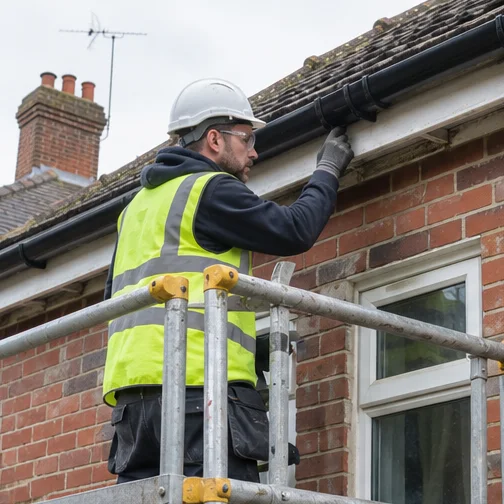
Photographic illustration of guttering repairs in london.
Can you fix a gutter that leaks at one joint?
If the fault is local and the surrounding parts are sound, a joint repair may be possible. We check whether the pieces have moved apart, whether the connection has deteriorated and whether a blockage is sending water over the seam.
Can you repair a sagging gutter?
We look at where the gutter has dropped and what supports it. A loose bracket may explain a small area of movement, but the condition of the fascia and nearby fittings matters. We discuss what can safely be secured.
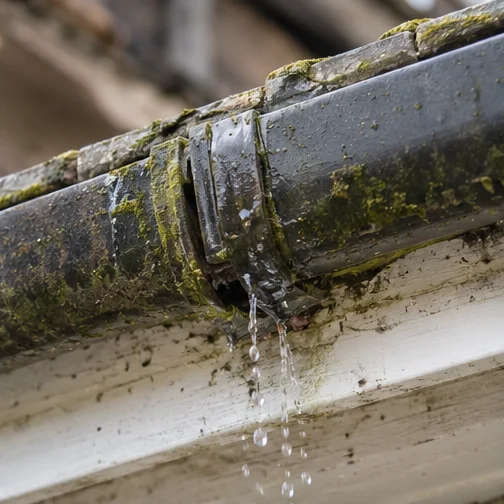
Find where water escapes
A drip below a corner is not always coming from the corner itself. Water can travel along the underside of a channel before it falls. We check the joints and outlet near the reported drip and look for staining that shows the water’s route. Let us know if the problem started after a storm, clearance visit or work to the roof.
We start with the location you give us and compare it with the visible condition of the run. Water on the wall below the roof edge can come from a seam, an outlet or the back of the gutter. A bracket that has shifted may affect where water sits, and a blockage can make a small defect more obvious in heavy rain. Tell us whether the fault happens in every shower or only after sustained rain. That can help us decide what to inspect first.
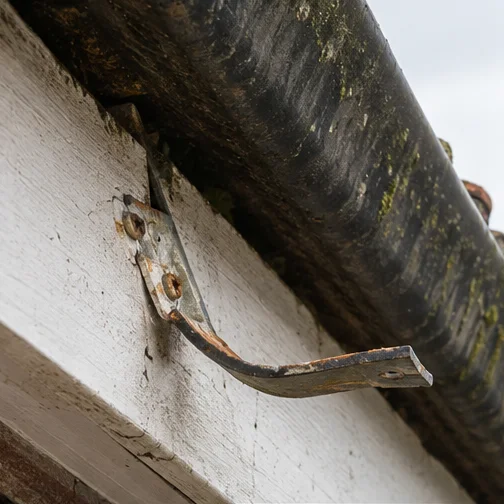
What a local repair can involve
A repair may involve closing a compatible joint, replacing a damaged fitting or securing a loose support. We check that nearby sections are in a condition to take the repair. If leaves are holding water against a seam, clearing the run helps separate the blockage from the defect.
Where a gutter union has opened, we look at both lengths it joins. A connector fitted to worn or distorted sections may not sit correctly. A cracked fitting can often be dealt with locally if the surrounding parts are in good enough condition. Where the channel has been patched before, we look for movement nearby and consider whether the original defect remains. The work depends on the material and the condition we can see at the affected point.
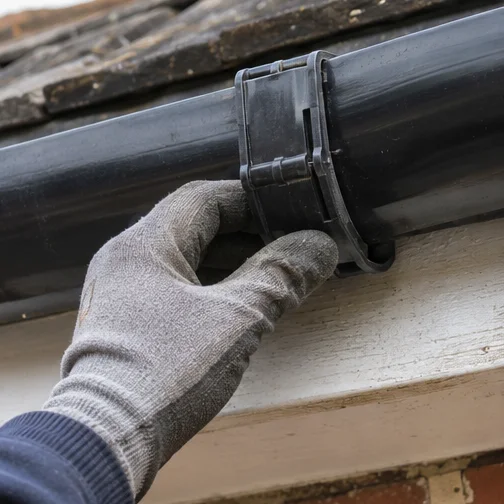
Brackets, joints and gutter material
We choose the repair according to the existing material and the condition of the fitting. A plastic connector can behave differently from a metal seam. The work also depends on whether there is enough room to reach the affected part without disturbing adjacent fittings. Tell us about previous patches or sealant, since they may conceal the original fault.
The support under a run is just as relevant as the visible fitting. A loose bracket may be the immediate problem, but it needs a sound surface to hold it. If the channel has dropped over a longer stretch, we look at adjacent supports and where the outlet sits relative to the rest of the gutter. If a section would need to be removed to see the fixing clearly, we explain what that adds to the visit before agreeing the repair.
How access changes the visit
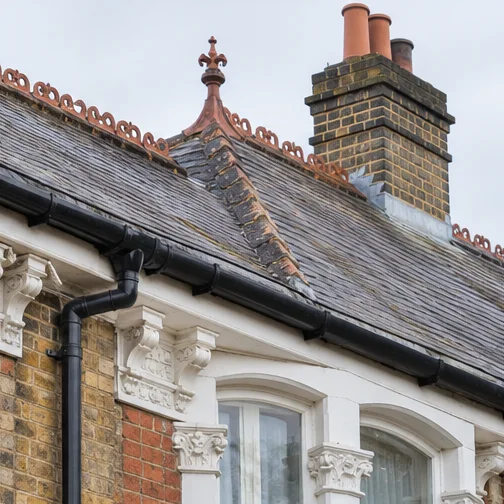
For a ground-floor porch, we may be looking at a single short run with its own outlet. On a London terrace, the same fault at the rear may be above a conservatory. At a block of flats or business premises, tell us who can open the relevant area and whether the affected elevation is above a shared route.
For a front bay or porch, the gutter often has a short run and its own outlet. On a rear extension, the visible drip may come from a higher roofline feeding the lower one. At commercial premises and managed blocks, the connection may be above an entrance or a service yard. Tell us where equipment can stand and who can arrange access so we can judge what is practical before attending.
When a local repair is no longer enough
Repeated leaks at several points, badly worn material and widespread movement need a different discussion from one loose fitting. We can assess replacing the affected run where repairs no longer make sense. For a supported channel with a failed lining, we can discuss gutter lining.
After a local repair we explain which connection or support was dealt with and identify any neighbouring section that still needs attention. The rest of the gutter may be an older system with different fittings, so we distinguish the repaired part from the surrounding lengths. If the weather does not reproduce the reported leak during the visit, we can still tell you what we found, what was repaired and which point to watch when it next rains.
From symptom to inspection
| Symptom | What we inspect | Possible work |
|---|---|---|
| Drip at union | Alignment and fit | Repair or replace the connection |
| Channel pulls away | Brackets and fascia | Secure or renew the affected support |
| Leak beside outlet | Joint and debris | Clear obstruction and repair if needed |
Which information helps us prepare
| Detail | Example | Useful for |
|---|---|---|
| Material | Plastic or metal | Choosing compatible fittings |
| Height | Above a rear extension | Planning access |
| Previous repair | Patch or sealant at a corner | Understanding what already failed |
Arranging a visit in London
A short video in rain can help us see where the water first appears, especially if it travels along the gutter before dripping. Include the wall and the nearest outlet in the frame so the point can be found again when everything is dry. If the roofline has changed after a recent extension, say which part was added. Tell us about any previous repairs at that joint and whether a neighbour shares the run or its outlet.
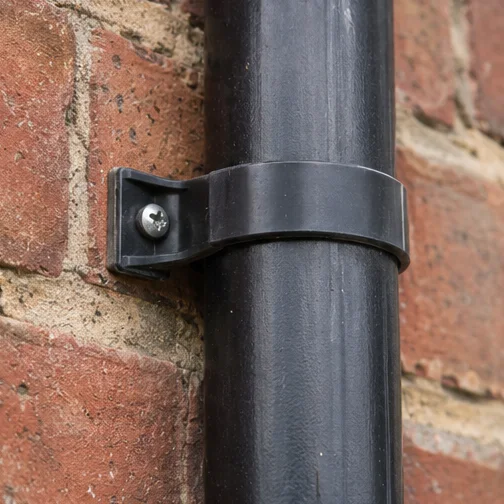
If the fault is in a pipe, mention whether the visible problem is at a bend, the bottom of the pipe or a clip farther up. A clip can loosen while the pipe remains usable, whereas a damaged connection may need a fitting. If water is backing up rather than escaping at the clip, the outlet and discharge point also need attention. A repair quote depends on which part of that route is affected.
We also ask who can approve additional work if the fault turns out to affect more than one fitting. For a let property, that may be someone other than the person who opens the gate. Give us both contacts if appropriate. If a compatible component cannot be identified in advance, we can discuss what needs checking on site before agreeing the parts. This is particularly useful where different gutter profiles meet on the same elevation.
Questions about guttering repairs
Can you fix a small hole?
We assess the surrounding material first. A local patch may suit a sound section.
Why does a joint leak after clearing?
A joint can still be loose or damaged when the channel is clear. Tell us where the water now escapes.
Can you fix a downpipe clip?
We look at the clip, the pipe and the surface holding it before deciding what needs securing.
Does every repair need replacement parts?
No. It depends on the fault and whether the existing fitting remains sound and compatible.
Can a repair be planned from a video?
A video can show where the leak appears in rain. We may still need to see the condition and access on site.
Can you repair two faults on the same visit?
Tell us about both when you enquire, especially if they are at different heights or elevations.
Request a quote for guttering repairs
Send us your postcode and describe the affected part of the building. Call us if you would like to talk through the work before arranging an inspection.