
Gutter Cleaning Islington
We clear gutter runs and check reachable downpipe openings on properties in Islington. If you look after a converted house or a block, identify the elevation and who can give access below it. A report from an upper flat is useful, but the position for the gutter vacuum may be in a lower garden, a shared yard or the frontage. We agree the runs and access before arranging the work.
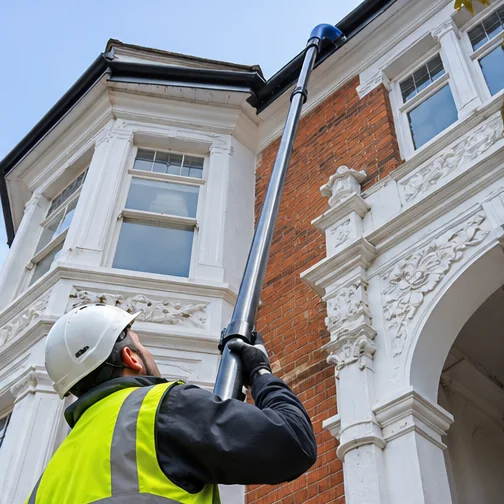
Illustrative photograph.
Access and authorisation
| Person involved | What they can confirm | What we need before attending |
|---|---|---|
| Resident | Where water appears | Elevation, window and time of the leak |
| Caretaker | Which shared doors open | Route to the working area |
| Managing agent | Which runs are included | Who can approve any separate repair |
Match the report to an elevation
A tenant might say the gutter leaks above the bedroom, while a caretaker refers to the same position as the rear return. Before visiting we ask for a photograph of the whole elevation and a note showing where the water appears. That is particularly useful when a building has different entrance numbers or more than one roof draining into the same side passage. Point out the nearest window or downpipe so the position can be found when the wall is dry.
Islington Council’s conservation area information identifies Barnsbury and Canonbury as distinct areas with historic residential buildings. A single property can still have several generations of rainwater fittings. A converted house may have an original upper run and newer pipework serving a lower addition. We identify which part belongs to the reported fault and ask who can open the spaces below each roofline.
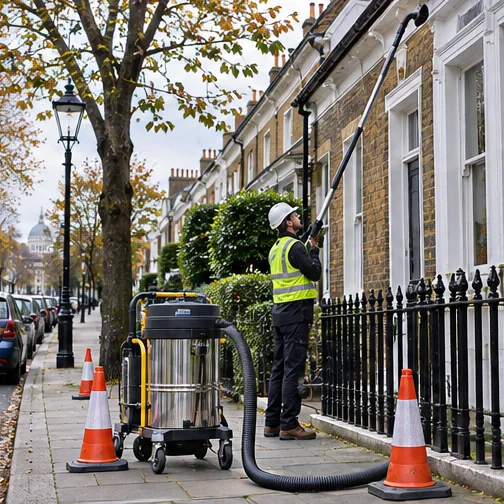
Work through the agreed gutters
When the roofline and working space allow, we use reach poles and a gutter vacuum to collect loose leaves and compacted moss. We work along the channel and pay attention to joints, corners and the mouth of the outlet. The material nearest the outlet can be wet and heavy even where the rest of the gutter looks comparatively clean. If one length is restricted by an awning or glass roof, we explain which access option needs to be considered.
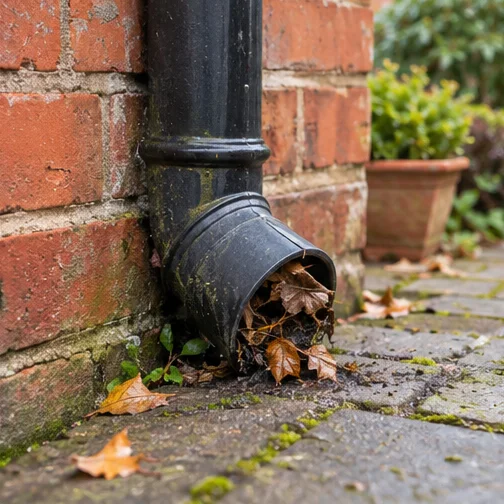
We check reachable openings into the downpipes and clear obstructions we can reach. If a pipe is shared by more than one run, tell us which part has overflowed and whether there are signs of water backing up lower down. A camera can help with an unseen section, subject to access. If a restriction appears to be below the opening, we discuss what can be assessed separately instead of promising that clearance of the channel will resolve it.
Agree who will open the shared parts
If you are instructing the work as a managing agent, tell us who holds the keys and who can approve a separate repair. A caretaker may be able to open the yard without being able to authorise work on a damaged joint. Giving us both contacts in advance helps us pass on what we find. If residents need to keep an entrance clear, tell us which door and when it is busiest.
At houses split into flats, a basement or garden flat may control the only route to the rear. Explain whether we can enter from outside or need someone to meet us. At a mixed-use property, identify the part above the shop and the part above the residential entrance. If you have a schedule of past maintenance, tell us which runs were cleared and whether any were left out because of access.
- Identify the block, entrance and affected elevation.
- Send separate contacts for access and approval.
- Point out shared outlets and any sections missed on the last visit.
- Tell us who should receive the findings.
Give a useful account after the visit
We tell the person instructing the work which elevations were cleared, which outlets could be reached and where a visible fault remains. In a managed building, it helps to agree in advance which names you use for each elevation so we can describe the same sections. If an occupant photographed water escaping, we can use that location to explain what we checked and whether the suspected joint was accessible.
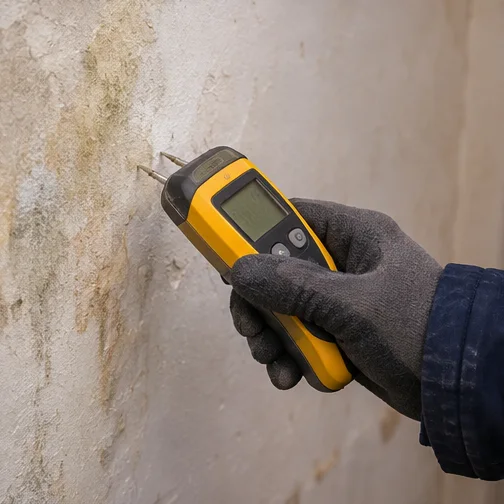
Where a single bracket or connection is loose, we can discuss repairing the affected fitting. Several failed lengths may call for replacement of the run. A supported concealed channel that leaks through its surface may be suitable for lining. Ivy can be cut back where it prevents access to a fitting, subject to what it is attached to. If water has already reached an interior wall, we can discuss assessment of the affected surface separately.
Services for the building manager
Guttering repairs
We identify the local seam or bracket that needs attention and tell the person responsible for the building.
Gutter cleaning
We agree which communal runs to clear and report any outlet we cannot reach.
Water damage repair
For an affected flat, tell us who can open the area and whether the suspected source is communal.
Gutter replacement
Where a repair is impractical, we describe which length needs replacing so the manager can arrange approval.
Gutter lining
If a supported channel serves more than one flat, we can assess whether its surface can be renewed without replacing the run.
Ivy removal
We can look at trimming ivy away from shared rainwater fittings once access is arranged.
Information to keep with the maintenance record
For repeat work, it helps to name the runs the same way on each booking. If residents call the garden side the rear and the building plan calls it the west elevation, include both names when instructing us. A note about the outlet nearest the communal stair can help us identify the part that caused trouble. If a new canopy or gate now sits below the run, update the access details even if the rest of the job is familiar.
A resident may notice staining below their window even though the visible outlet sits beside another entrance. We ask for a picture or a description that lets us relate the report to the relevant roofline. If several people have reported different symptoms, list them individually and give the timing. That helps distinguish one overflowing channel from unrelated issues at separate points. We can then discuss what should be looked at during clearance and what may need a separate inspection.
If you want a quote for more than one building, identify which sites need a single visit and which need repeat clearance. Give the height and access conditions separately for each site. A shared address or management company does not mean that the same working arrangement will be suitable for every roofline. Where a camera view is requested, tell us which run the recipient needs to see and what fault they are trying to establish.
If the on-site contact is changing, send the replacement details before the visit. We need a person who can show us the entrance and identify any areas that must stay open for residents. Tell us if that person can only open the gate at the start, or if access requires arranging a meeting on the day.
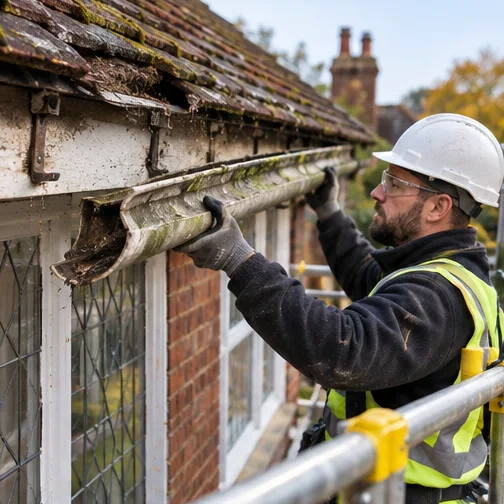
Checking a run shared by several flats
| Observation | What we check | What we report |
|---|---|---|
| One flat sees a drip by the seam | Reachable connection and nearby debris | Whether the joint appears defective |
| Water escapes near the common outlet | Material around the opening | What could be cleared from that position |
| Part of the run is hidden above a canopy | Working space and available camera view | Which section still needs access |
Plan repeat visits for more than one building
If you manage several Islington properties, send the individual postcodes and the elevations that need attention at each one. The setup at a frontage with a paved path can be quite different from a block with a narrow rear yard. We can discuss scheduled maintenance and what information should go to the keyholder before the appointment. Record any changes to gate access, extensions or roof work since the previous visit.
Our gutter clearance service explains the typical visit. Tell us if you want a camera view of a named section, whether the occupants have reported an active leak and who will receive the findings. If one building has a roofline that needs a separate access arrangement, we can distinguish that from the runs that are reachable with the planned equipment.
Questions from Islington residents and managers
Can the visit cover a communal run and a private extension?
Tell us who is responsible for each gutter and what access is available. We can identify them separately in the booking.
Who should receive the findings?
Give us the contact who can act on the information. It helps to have a separate on-site contact if that person cannot open the gate.
What if the keyholder can only meet you in the morning?
Mention the restriction before arranging the appointment. Tell us which entrance is affected and whether the keyholder must remain on site.
Can we arrange clearance if the affected flat is empty?
Tell us how we can reach the area below the gutter and whether access through the flat is needed. We can discuss the visit once the route is known.
Can you inspect the shared pipe without working inside flats?
We check reachable external openings first. If something appears to need access from inside, we explain where and why before any additional work is arranged.
How do we report a gutter that has already been repaired?
Send the location of the previous repair and the latest symptoms. A photo of the seam in dry weather and a description of what happens in rain can both help.
Coverage and bookings
See the areas we cover. For nearby enquiries, see Camden Town.