
Gutter Cleaning Hoxton
We clear gutters and check reachable openings in Hoxton. If you are reporting water that drips through a courtyard or lightwell, tell us where the pipe is visible and who can open the ground below. We can agree which lengths are accessible and explain where a concealed outlet or fitting may need a separate inspection.
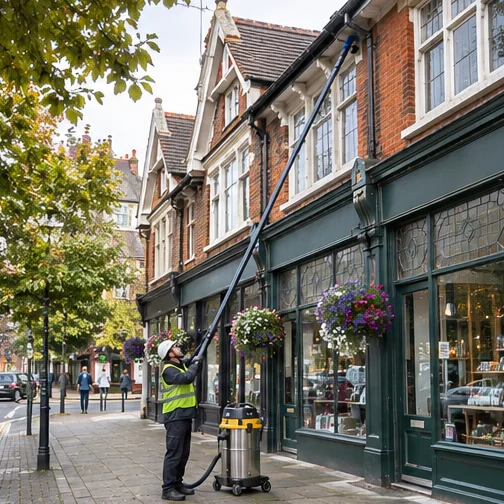
Illustrative photograph.
Explain which elevation faces the lightwell
An internal courtyard or lightwell can sit below several walls that look similar from the entrance. Identify the nearest door or window and tell us which side of the building the water runs down. If the gutter itself is hidden, include the location of the nearest visible pipe. A ground-level view of the whole wall may show where the pipe joins a return, even if it does not show the channel above.
Tell us whether the issue first appears at roof level, at a joint halfway down the wall or near the ground. Water can move along a ledge before falling. The point where you see it land may be different from the part that needs checking. Where a different occupier reported the problem, ask them to describe the position relative to their entrance so we can identify the same elevation from outside.
Give the property contact a record of the accessible sections
After the visit we explain which lengths and openings were reached and where we cleared material. If the gutter above one wall could not be seen from the courtyard, we identify that part and explain what access or inspection may be needed. Tell us who should receive the findings and what names they use for the courtyard and surrounding elevations. This helps the next person recognise the area even if they were not present.
For a Hoxton quote, send the postcode, the height of the wall and the route to the lightwell or courtyard. Include where water first appears and whether the pipe remains visible all the way down. If there has been previous work on a covering or gate, tell us what changed. A new route or obstruction can affect the position from which the gutter can be approached.
If the area below the gutter also serves basement doors, identify which door needs to stay clear. The working position may be visible in a wide photograph even when the roofline is not. Give us the name of the person who can open the appropriate route and explain whether another approach is available.
Check how equipment can reach the ground below
If access is through the building, tell us about stairs, turns and the width of the final door. A courtyard can have clear ground below the gutter while the route into it is too narrow for the planned setup. Another entrance or a path through a service area may make a different working position available. We discuss both the route and the ground beneath the affected length before including it in the visit.
A lightwell might have a low parapet or railings that restrict where the operator can stand. Show the ground and roofline from a safe position and tell us who can open the relevant doors. If another resident or business uses the area, give us a contact who can agree when it is available. If there are two distinct routes, explain which one is suitable for bringing in equipment.
- Name the window or entrance nearest the wet wall.
- Describe the route and final doorway into the courtyard.
- Show any railing or basement entrance below the run.
- Tell us where the pipe becomes hidden.
Agree the route into the working area
| Route | Detail we need | What we consider |
|---|---|---|
| Internal passage | Door width, stairs and final turn | Whether the equipment can be brought through |
| Side entrance | Keyholder and available ground | Possible working position |
| Lightwell beside a basement door | Railings and routes that must stay clear | Reach to the affected elevation |
Clear the agreed run and check the nearest opening
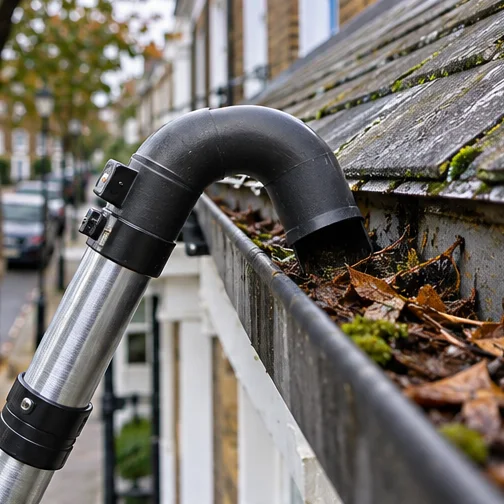
Where access and roofline suit the equipment, we use reach poles and a gutter vacuum to collect leaves, moss and compacted material. We work along the reachable gutter and pay attention to turns and outlets. If an upper length drains towards the courtyard, we identify the opening that serves it. We check reachable debris at that point and explain where the channel continues beyond the position we can reach.
If a pipe disappears into the wall or behind another fitting, we tell you which part is visible and what might need closer inspection. Ask about a camera check when the channel is not visible from the ground. A camera may show the accessible run and an opening, depending on the available angle. We discuss what view is useful when the reason for booking is a leak rather than visible debris.
Separate work at the premises
Gutter cleaning
Clear the agreed reachable gutters above the courtyard and check accessible openings.
Ivy removal
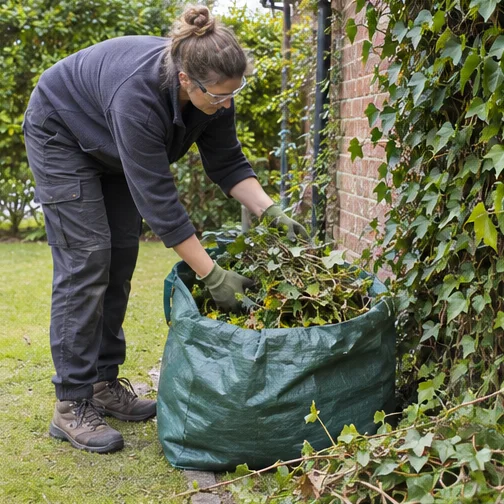
Consider cutting back growth where it blocks the route or covers a fitting.
Guttering repairs
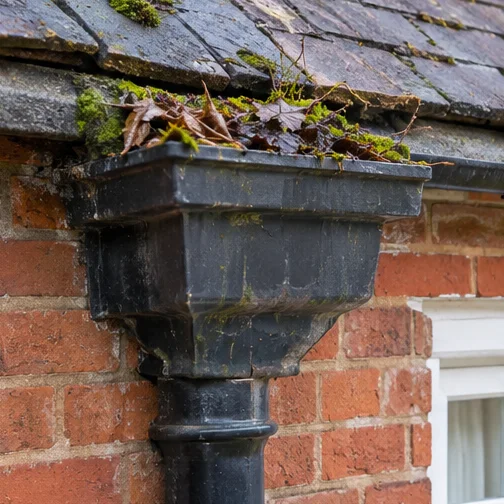
Identify a visible leaking joint or moved support beside the reported wall.
Water damage repair
Discuss damage to an indoor wall separately from gutter clearance.
Gutter replacement
Discuss which worn lengths would need renewing above the lightwell.
Gutter lining
Assess a suitable hidden channel and its outlet before discussing lining.
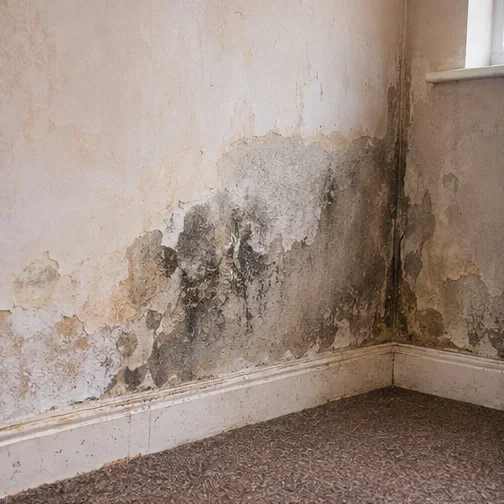
Identify the wall and part of the system involved
| Observation | Detail to send | What we check |
|---|---|---|
| Water falls from one side of the lightwell | Nearest opening, window or door | Accessible gutter and outlet above it |
| Wet wall below a pipe connection | Position where water first appears | Visible joint after checking for debris |
| Water reaches the ground away from the gutter | Ledge or pipe route in between | Which visible part feeds the area |
Consider follow-up work if the same wall stays wet
A fitting can continue to leak after the reachable channel is clear. We can inspect the visible joint or support and discuss repair to the affected section. Where damage extends along several pieces, ask about renewing the worn gutter and how it would connect to the retained parts. If a supported channel has a failed inner surface, lining can be considered after inspecting the channel and the route to its outlet.
If growth hides an opening or prevents access to a pipe, tell us how far the ivy extends and what you want removed. We can discuss that work separately. If the wet wall has affected an indoor room, water damage assessment is separate from clearance of the gutter. Our gutter cleaning page explains how we deal with reachable debris and report visible defects.
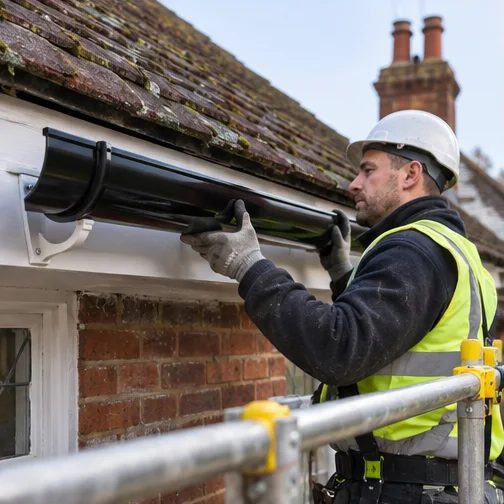
What helps when several people report the leak
If two routes lead to different parts of the courtyard, show where they meet and where the gutter sits above them. A photograph from a doorway can help us work out whether that route leads to the wall described in the report.
If you can see the top of the pipe from a different floor, tell us where it meets the wall and which side of the lightwell it serves. Another person may be able to describe what happens farther down at ground level. We can compare both reports to identify the location without asking anyone to approach an edge. If the earliest signs were indoors, mention the nearest room or entrance so we can relate the reported position to the exterior wall.
Coverage and bookings
See the areas we cover. For nearby enquiries, see Shoreditch and Haggerston.
Hoxton questions about enclosed working areas
Can you clear the gutter from inside the courtyard?
It depends on the height, reach and route into it. Tell us what ground is available and whether the roofline can be seen from there.
Do you need the occupier who reported the leak to be present?
Not always. Give us enough detail to identify the affected position and tell us who can open the working area.
Can a camera check a gutter behind the lightwell wall?
Ask about a view of the accessible part. We can discuss what the angle and reach allow and where closer inspection would be needed.
What if the only door in is through another business?
Agree access with the person who controls the route and tell us when it is available. We can then discuss the working position.
Can you say if the same gutter serves more than one wall?
We explain what can be seen of the run and its outlets. A hidden connection may need separate investigation.
Who can receive the findings if I am not there?
Give us the details of the relevant manager or occupier. We can describe the visible location and which lengths were reached.