
Gutter Cleaning Brentford
We clear reachable gutter channels on Brentford properties and check the downpipe openings we can access. When you enquire for a flat, shop or home, say which wall the problem is on and how we can approach it. A photograph may show the water, but the building number, doorway and route to the working area help us establish what can be included in the visit.
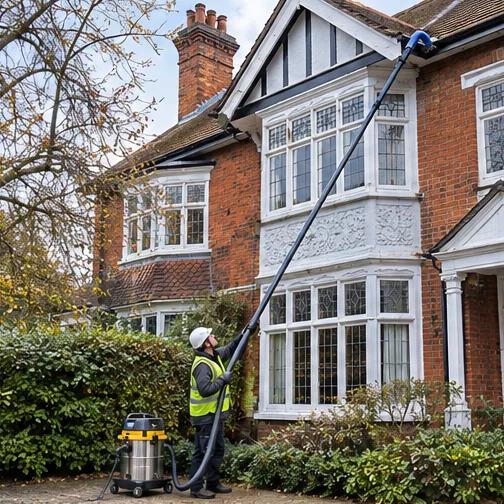
Illustrative photograph.
Locate the reported water before we attend
| Position mentioned in the enquiry | Check within reach | What makes the report clearer |
|---|---|---|
| Drip near a communal entrance | Gutter or canopy above the door | Entrance identifier and photo of the roofline |
| Water appears on a courtyard wall | Reachable run and opening nearest the spill | Where the water first emerged |
| Mark inside below a balcony or canopy | Visible condition of the outside gutter nearby | When the mark appeared and what was observed in rain |
Name the building as well as the elevation
Hounslow Council’s Brentford town centre profile describes shopping parades and the town’s setting where the Thames, Brent and Grand Union Canal meet. If you are reporting a leak at premises with a street side and a waterside or courtyard side, say which elevation you mean. Your photo should show the point where the water appears in relation to an identifiable door, balcony or outlet.
If your address has more than one block, give us the block or entrance number even when you have already supplied the postcode. A ground-floor shop may use a different door from the flats above it. A resident might report water near their window without knowing where the gutter starts. A caretaker or facilities contact may be able to tell us which channel or pipe is above that part of the wall.
Let us know if you have seen the water coming over an edge or only noticed a mark afterwards. A mark below a balcony or canopy cannot by itself show which channel overflowed. If you can see the water travel along the underside of a fitting, tell us where that trail begins. We use what you observed to discuss the accessible lengths and any other part that needs investigation.
Inspect the reachable run from the agreed side
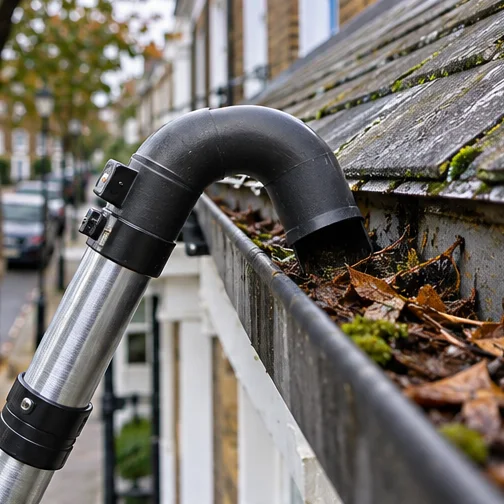
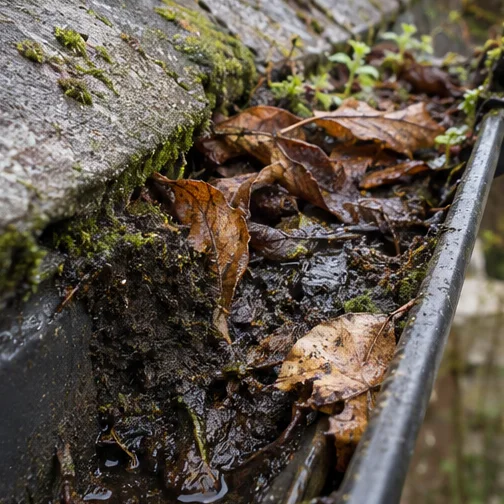
Where the channel and working area suit a gutter vacuum, we use it with reach poles to collect debris along the agreed lengths. A run beside an outlet can hold compacted moss and silt beneath looser leaves. We clear what we can reach and check the mouth of the downpipe where access allows. If a shorter channel or canopy drains separately, it needs to be included explicitly rather than assumed to be part of the upper run.
A camera can help us inspect a section that is hidden by the gutter edge. Tell us beforehand if you want to see a particular opening or record the view for an owner or manager. Whether a camera can show it depends on the roofline and position. We explain where the visible check ends if the pipe then disappears into the building or behind another fitting.
At the end, we identify the reachable runs and downpipe openings we have cleared. If the other elevation could not be approached, we describe where access stopped and discuss the options for reaching it later. Our gutter cleaning service covers the accessible work agreed for the visit. If a fault remains outside that work, we describe what we can see rather than claiming it has been resolved.
Identify the access that is actually available
For a courtyard elevation, tell us which entrance leads to it and who can let us in. The site may have a pedestrian route from one side and a different entrance for vehicles or equipment. Give us both if they are relevant. If there are steps or a narrow turn between the gate and the working area, describe them. A suitable ground position can be some distance from the easiest place to unload.
Where a path runs beside the affected wall, explain who uses it and what part needs to stay open. For a communal area, the contact who opens a gate may not be able to approve taking up space below the gutter. Ask who can agree the position before the appointment. If the only usable ground is within a private terrace or garden, we need to discuss access with the person responsible.
For a house with its own frontage, give us a view of the eaves and the path or driveway below them. Include any extension that blocks a direct approach to a higher channel. If the front and rear have different access, describe each route rather than assuming the same setup can be used on both sides. We can explain which sections are practical from the positions agreed.
- Specify the block, unit or entrance nearest the gutter.
- Describe the available approach to the affected elevation.
- Show the edge where rainwater first becomes visible.
- Tell us who receives the findings for a managed building.
Deal with any fault the visit uncovers
A local joint or fitting may still leak after the gutter is cleared. We can discuss repairing that part of the guttering if we can identify a visible defect. If several connected sections have failed, we can assess renewing the affected lengths and how they would meet the outlets serving the building. We take account of what belongs to the property or unit in the enquiry.
Where an existing concealed channel is supported but its surface is failing, we can discuss lining after looking at the channel and outlet. If growth covers a pipe or makes the route to it difficult, we can assess cutting back what affects access. If water has already damaged a finish inside a flat or business, tell us which room is affected and whether the leak is still active. We can discuss assessment of the water damage separately.
Services for the building manager
Guttering repairs
A visible leak above a canopy or entrance can be discussed after clearance.
Gutter cleaning
We agree which courtyard, street or garden runs are accessible.
Water damage repair
We discuss affected interior surfaces separately from clearing the roofline.
Gutter replacement
We check where renewed lengths would connect to gutters retained at the building.
Gutter lining
We assess a supported concealed channel and outlet before discussing a liner.
Ivy removal
We can assess growth that hides a bracket or limits the approach to the outlet.
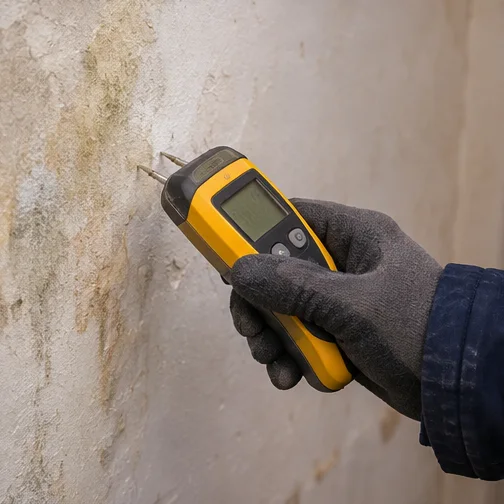
Information to keep with the maintenance record
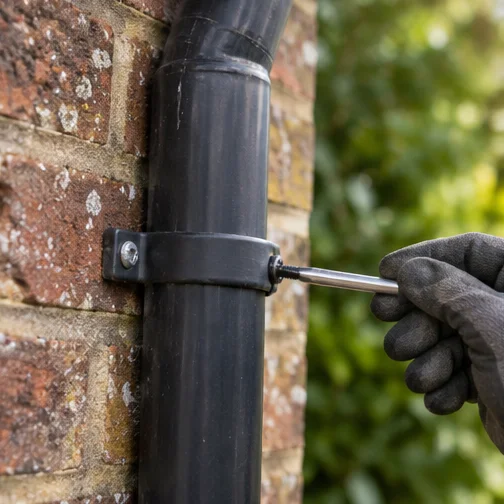
Agree access by elevation
| Route to the affected wall | What to confirm | Why we ask |
|---|---|---|
| Through a communal entrance | Which contact can open it and where the route turns | Establish how equipment can reach the courtyard |
| Along a path below the gutter | Who uses the path and when it must stay clear | Agree an appropriate working position |
| From a separate garden or terrace | Who controls access to that ground | Identify which section can be reached from there |
Give the person responsible a usable record
If you are arranging a visit for a managed building, give us the naming system used for the elevations. “Courtyard above entrance B” is easier for an absent property manager to identify than “the back”. Give us the details of anyone who should receive the findings. If the person present cannot approve a separate repair, tell us who can make that decision after they have seen what was reported.
For a single house, tell us what happened after any earlier clearance. If one length was reachable and another was excluded, identify them separately. A leak near the same position may have a different cause if the outlet was already checked. We can refer to the relevant fitting or section when discussing what we found and whether the work requires a different visit.
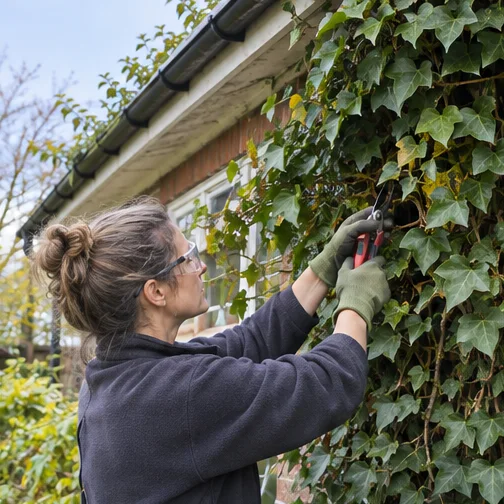
Brentford booking questions
Which address should I give for a courtyard elevation?
Give us the postcode, building or block and the entrance that leads to the courtyard. Tell us where the gutter sits relative to that route.
Can you clear a gutter above a balcony from the ground?
We need to see the height, projection and available position. A wider picture helps us discuss what is practical before booking.
What if the report came from a tenant who cannot open the gate?
Send the tenant’s description and give us the details of the person who controls access. We can discuss the route with that contact.
Can you include a separate shop canopy?
Tell us which canopy and where it drains. We can discuss including it as its own run if it can be reached.
What if you cannot reach the other side of the building?
We say which lengths were cleared and which side remains. We can discuss what access would be needed before arranging any further work.
Will the findings identify a particular outlet?
We describe the openings we could reach and what we found there. Use a nearby door or other reference if more than one outlet is visible.
Coverage and bookings
See the areas we cover. For nearby enquiries, see Chiswick and Isleworth.