
Gutter Cleaning Belsize Park
Water running down the face of a stucco villa can follow ledges and mouldings before it becomes visible at a bay or window. Clearing the gutter above may be the first part of an enquiry, especially if the wetting is new after a spell of rain. Glen’s provides gutter cleaning in Belsize Park for houses, flats and managed buildings. Tell us where the water first shows, what sits above that point and whether the ground beneath is open. That gives us a starting point for discussing the visit.
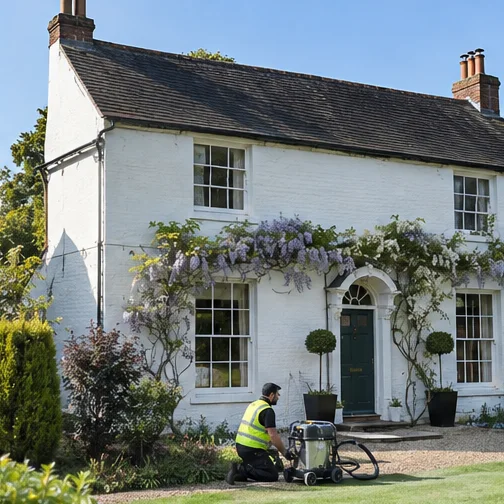
Illustrative photograph.
Look above and below the cornice
Camden’s Belsize area design guide identifies both stucco-fronted villas and properties with prominent brick elevations. On an individual house, a decorative ledge can make it difficult to see whether the channel sits at the outer edge or further back. Some parts of the roof may discharge through a visible outlet while others have pipes that are harder to trace. Start with a photograph showing the eaves and the wall together. Mark the height at which you first saw water rather than just the place where the stain eventually appeared.
A low roof over a bay window may collect water from its own small area and from runoff that lands on it from above. During heavy rain, water can spread along that roof before dropping over the edge. Tell us if the lower roof appears wet early or only once the main roof begins to discharge. Different answers suggest different places to look. At buildings with several bays, identify the window by floor and position when viewed from the street or garden. A building manager can then match the report to the relevant roof edge.
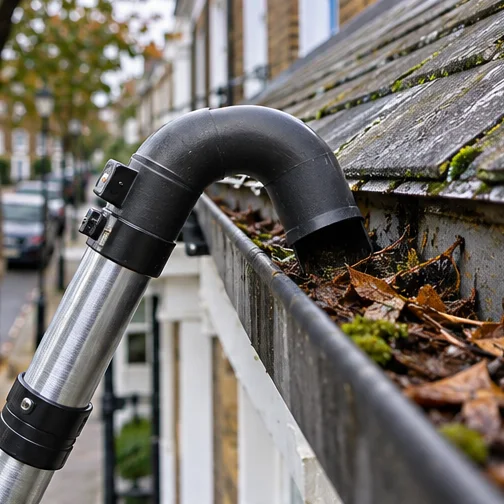
Explain how the approach changes at the boundary
For an address on Belsize Park Gardens or an adjoining street, we ask about the distance between the pavement and the wall. A front garden may provide useful space while a basement opening, a bay or a planted strip interrupts the most direct approach. Describe any wall or railing where equipment needs to pass. If the gutter serves the side of a villa, identify whether the side passage remains the same width or narrows between buildings. Tell us which parts are private or shared so the agreed working position is clear.
In some conversions, the front entry and rear garden are managed separately. A ground-floor occupier may admit us through their home or control a gate with a different key. The person booking the visit should identify who can confirm each arrangement. If a route includes tight stairs, a low arch or a door that opens across the working area, send a wide view of that section. The height of the gutter, overhead space and footing all affect whether a reach pole can be positioned safely. We assess those conditions for the particular elevation.
- Main roof and bay drainage
- Front gardens, lightwells and rear access
- Stucco and brick elevations
- Named records for individual roof edges
Check where water should leave the system
Debris can accumulate at a point where the gutter turns, at the foot of a short return or at a hopper opening. A small obstruction there can affect much of the connected run. For gutter cleaning, we clear agreed accessible channels and check visible outlets where the conditions permit. If an opening appears clear but the pipe is hidden behind a wall or leads into an enclosed drain, the route beyond the visible point may need to be investigated separately. A record of past work can help identify that route.
Look for more than one kind of evidence after the clearance. Silt near an outlet may explain standing water, while wet marks at the underside of a seam might indicate a joint problem. A photograph showing both the affected seam and an adjoining length is helpful. If a trough spills while the visible pipe continues to discharge, note whether the spill starts at one end or runs across several bays. The observations may support a closer inspection of the outlet, the gutter alignment or the way an upper roof discharges into it.
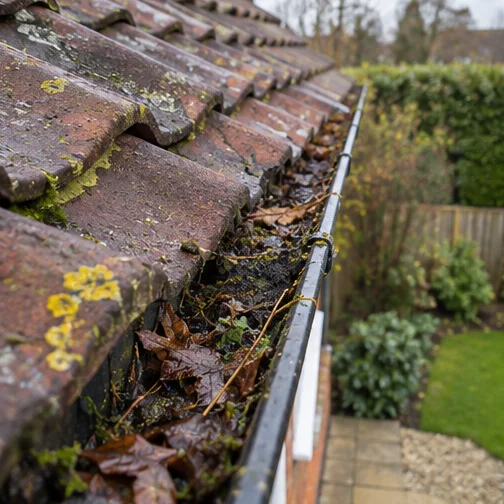
Reporting water on Belsize Park elevations
| Where water becomes visible | Detail to send | What the detail helps establish |
|---|---|---|
| Face of a cornice | Whether water comes over the front or appears underneath | Places the symptom relative to the roof edge |
| Top of a bay window | Whether there is a visible drop from higher up | Distinguishes the levels to check |
| Around a hopper | Where wetting begins on the wall | Links the report to a particular outlet or joint |
| Inside a top-floor room | Window or ceiling position and when the mark changes | Gives the investigator a point to compare outside |
Consider how any repair fits the existing elevation
A dark rainwater pipe against stucco can conceal its material and the condition of connections beneath the paint. If you know when a section was installed or repaired, share the invoice or any details of the fitting. For guttering repairs, we consider whether the problem appears local to a joint, support or outlet and how the adjoining sections are performing. A repair specification may need closer access than the inspection from ground level. Tell us if the building has requirements about appearance or materials that should inform the proposed work.
Lining can be considered when a suitable channel remains sound enough to support it and the details at the outlet allow a satisfactory connection. Gutter replacement may be the more appropriate discussion for runs with widespread deterioration or unsuitable alignment. If growth passes behind a pipe or reaches a decorative surface, include that in an ivy removal enquiry so the stem route and substrate can be assessed together. For water damage repair, an internal mark and an outside trail are separate observations until their relationship is established. Dated photos can help someone investigate where water entered.
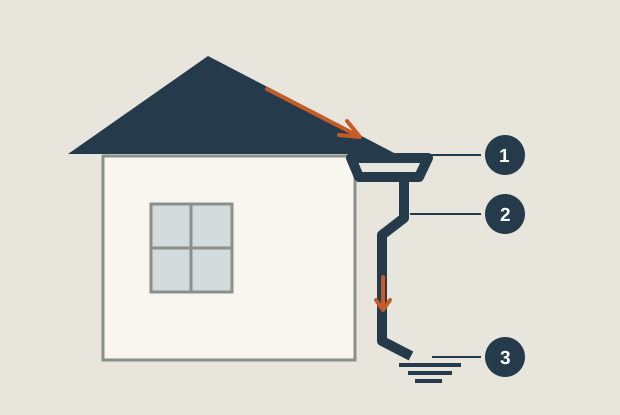
Work we can discuss after clearance
Gutter cleaning
Plan clearance for accessible villa eaves, bay roofs and returns.
Guttering repairs
Assess visible joints and supports alongside the condition of the adjoining length.
Gutter lining
Consider lining where support, channel geometry and outlet details are suitable.
Gutter replacement
Review materials and profiles where sections need to be replaced.
Ivy removal
Locate stems around cornices and concealed pipe fixings before agreeing what the visit will cover.
Water damage repair
Compare internal marks and external details to investigate recurring wetting.
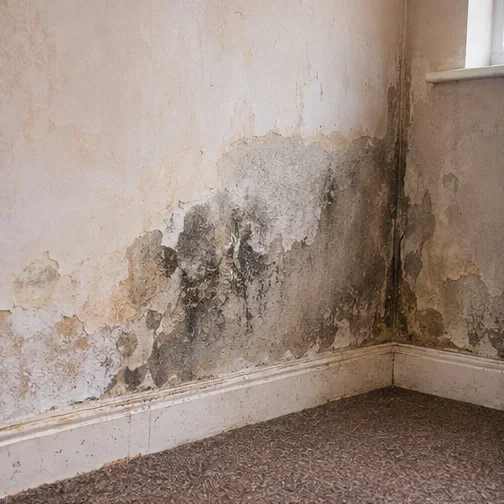
Check the location of any follow-up
After a visit, an owner may receive a report covering the front length and a short return while a tenant later describes rain against the back. Compare the affected area first. For a building with several flats, use a reference that makes sense both indoors and out, such as the upper window above the left side of the communal door. If work on one section requires another approach, the record should identify which part still needs attention. The same description can then be used by the contractor or agent organising it.
Keep a brief note of what happened after the next rain. Did drops appear under the same fitting, or did a patch show up further along the cornice? Is the mark visible all the time or only when it is wet? A photo taken from the same safe position before and after rain can be easier to interpret than several close views with no landmarks. If a damp patch spreads into the room, share the timing and location with the person responsible for arranging the follow-up. The building fabric and the external water route may need to be assessed together.
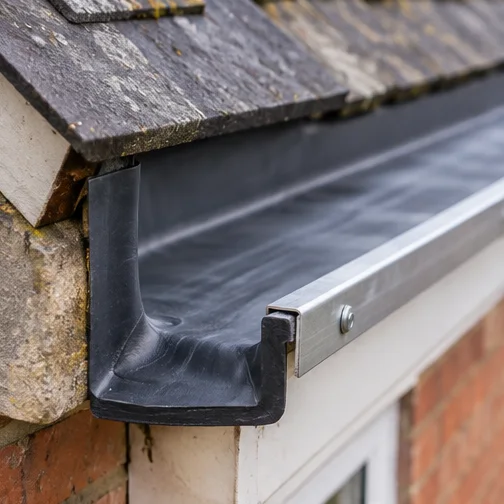
Clearance access by elevation
| Working area | Describe before booking |
|---|---|
| Front garden below villa eaves | Steps, planted beds and any lightwell behind the boundary |
| Side return between buildings | Narrowest gap and where ownership changes |
| Rear garden of a converted property | Key holder, gate or route through an occupied flat |
| Paved area beneath a projecting bay | Width of the clear area outside the bay |
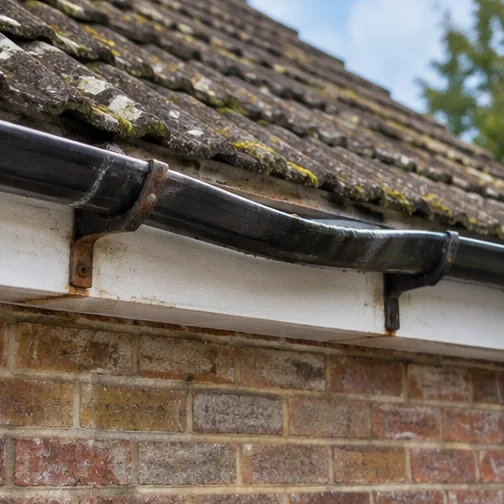
Before we assess the roof edge
Questions from Belsize Park residents
Can you clear the gutter above a bay and the main one on the same visit?
Ask for both when you make the enquiry and send a view of how the roofs relate. Each needs a suitable approach and its own assessment. A lower roof can sometimes prevent access from the position you would use for the main edge.
Should I mention the decoration on the front of the building?
Yes. Send a picture showing the cornice or moulding near the gutter and explain any known requirements for work on that elevation. It helps us identify what surrounds the fitting and discuss what can be reached.
What if the garden belongs to a flat that is not reporting the leak?
Arrange access with the occupier or responsible person and tell us how to enter. Confirm whether the proposed work is on the communal rainwater system and who should receive the record. Their contact details can also help avoid a missed visit.
Can the exterior look dry before we notice an internal mark?
Yes. Different surfaces show water at different times, and the entry route may be concealed. Record the weather and when the mark first appears. Include any recent work on the roof or wall that may help with the investigation.
Do you need to see a leak happening to arrange clearance?
No. Tell us where you last saw it and describe the nearest roof edge, outlet or pipe. Safe photographs of the area and the available approach help us understand what can be inspected during the visit.
Does a blocked outlet always spill over the nearest side?
No. Water can back up and leave the channel at a different low point or seam. Tell us where it spills and where the outlet is, if you know. We can use those details when considering what should be checked.
Coverage and bookings
See the areas we cover. For nearby enquiries, see Hampstead and Swiss Cottage and Primrose Hill.