
Gutter Cleaning Hampstead
When a house has a parapet or a concealed roof channel, the first sign of trouble may be a stain beside a hopper or water dripping behind a cornice. A visible trough on another part of the building can be perfectly clear. Glen’s provides gutter cleaning in Hampstead for accessible rainwater systems. Tell us which wall shows the symptom and whether the property has more than one roof level. If you are unsure where water leaves the roof, a wide photograph taken from a safe position is a useful way to begin.
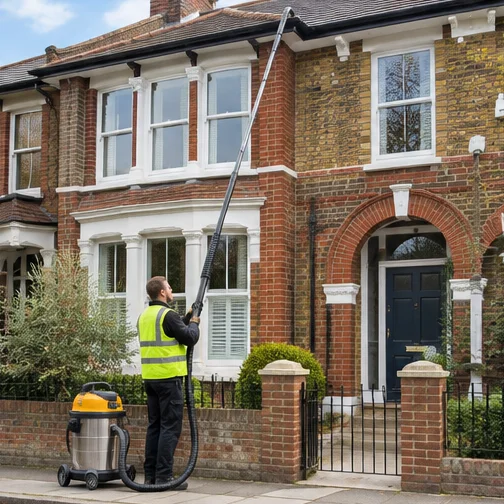
Illustrative photograph.
Follow the outline of the house
Camden’s Hampstead conservation area statement describes the village’s narrow streets and steps, and the irregular grouping of some older buildings. The character is evident around Church Row and Flask Walk, but property access varies from one frontage to the next. At enquiry stage describe the actual position outside your door. An entrance set back behind a railing offers a different approach from one directly beside a public route. An alley with a staircase may lead to the rear without offering room to work on the side elevation.
Some buildings have deep window wells or basement stairs between the pavement and the wall. Others have a roof above a projecting bay. Take one photograph showing the full height and one showing the area beneath the affected length. A picture of the eaves alone can hide the space needed to bring equipment to the wall. Where a rear approach is easier, tell us how it is reached and who opens the gate. If the street and garden sit at different levels, include both in your description.
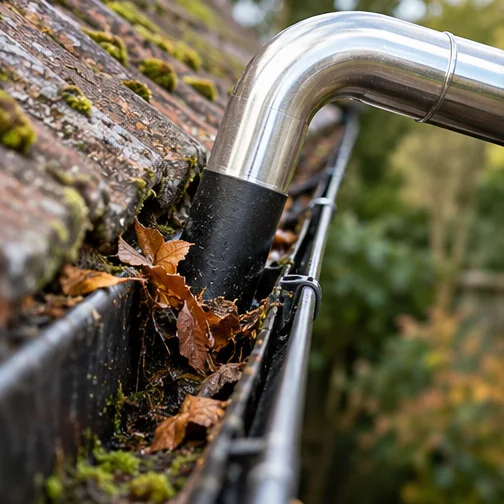
Record which sections are accounted for
A useful job record can name the front hopper, a short bay gutter and the rear run independently. It can also mark the position of any obstructed or concealed channel so an owner understands which parts still require attention. When someone asks about a recurring problem, that record allows them to distinguish the place already inspected from the next area to look at. A freeholder and tenant may refer to the same pipe by different names. Use a fixed landmark, such as the window immediately above a particular door, so that each person can follow the description.
In the next rain, compare the original symptom from a safe vantage point. Note whether water appears soon after rain begins or only after a longer period. Where the report concerns an inside wall, take a dated picture and describe where the edge of the damp area sits in relation to the nearest window or ceiling line. A persistent issue can then be discussed with the relevant people. An observation from outside can help define the next inspection, while an assessment of an enclosed drain or roof structure may need different arrangements.
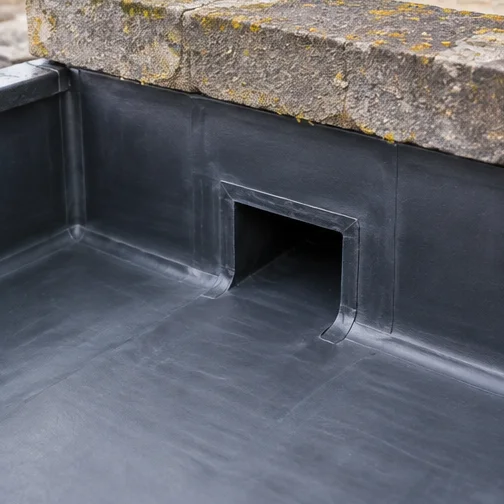
Locate the outlet before assuming where the water starts
A roof with a parapet can collect water in a channel behind the wall. From the pavement you may be able to see only a hopper or the bottom of a pipe. If the hopper overflows, describe whether water spills over its top, emerges behind it or runs down from somewhere above. A steady trail across the wall before any water appears at the hopper may point us to another feature. When two roofs discharge through separate openings, identifying the one closest to a stain helps decide what to inspect.
Gutters also run above bay windows and along the edges of later extensions. Their outlets may carry runoff from a much smaller roof than the main system. A wet patch beneath a bay can therefore arise from the upper elevation or from the bay’s own flashing, outlet or edge. Record what you saw without guessing which of these is responsible. Where safe access and an appropriate view are available, gutter cleaning can remove debris from the agreed channels and openings. A concealed roof section may need different access or another trade.
- Village frontages and stepped access
- Roof channels and hopper openings
- Assessment of older rainwater fittings
- Clear records for owners and agents
Preparing an access description
| Starting point | Information worth including |
|---|---|
| Door facing a narrow street | Whether there is a setback and who uses the route |
| Steps from front to back | Position of turns, gates and handrails |
| Planted rear garden | Any areas below the gutter that a hedge or pergola blocks |
| House arranged as flats | Who holds access and who authorises the agreed work |
Explain what has already been repaired
If you have an invoice for previous gutter work, look for the elevation, component and date. Some repairs relate to a local seam or connector. Others alter how water travels from a channel to an outlet. Knowing what was changed helps us compare a recurring symptom with an older report. A painted line across a fitting is worth recording in a photograph if it helps identify the location. Paint colour by itself is a poor way to identify either the base material or the means of joining it.
The type and condition of the system affect whether repair, lining or replacement is practical. Gutter lining can be considered where the existing channel and support are suitable and the outlet details allow a workable installation. A displaced support may require attention before a liner is discussed. A small number of distinct defects may be candidates for guttering repairs, subject to the condition of surrounding material. For an owner considering replacement, available records of the original profile and any applicable property requirements help define the options. Identify any part of the design the owner is responsible for retaining before work is specified.
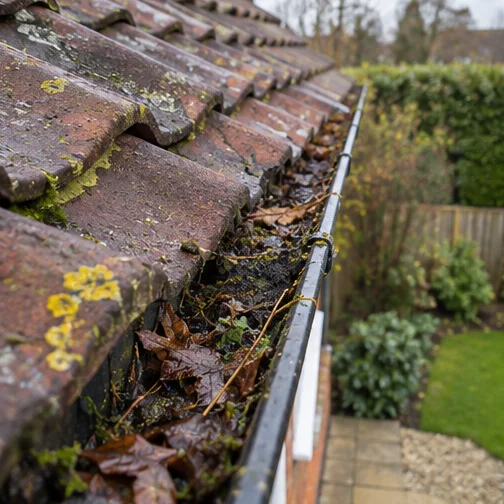
Separate work at the premises
Gutter cleaning
Clear accessible troughs and openings and record sections obscured by roof details.
Ivy removal
Assess stems behind fittings before agreeing how growth will be removed.
Guttering repairs
Review leaks at accessible hopper joints, supports or seams.
Water damage repair
Use dated moisture observations to inform an investigation of the affected area.
Gutter replacement
Discuss matching the profile and connections if rainwater goods need replacement.
Gutter lining
Assess support and outlet geometry where a liner might be considered.
Observations to share for a Hampstead property
| Feature | What to record | How it informs the visit |
|---|---|---|
| Parapet above a hopper | The place where wetting first becomes visible | Helps distinguish the visible fitting from the roof channel |
| Roof edge over a basement well | Location of railings, steps and landing | Shows possible approaches to the affected elevation |
| Rainwater system with previous repairs | Date, wall and fitting if known | Allows comparison with the current symptom |
| Low bay roof beneath taller eaves | Which level appears wet first | Helps identify whether more than one roof edge needs consideration |
Consider what the garden adds to the job
Where a plot adjoins an area of mature planting, the vegetation below an eave matters as much as what lands on the roof. A hedge can interrupt the route along a wall. An overhanging branch can make one end of a channel harder to inspect. Leaf litter collects unevenly, particularly at changes in direction, around a joint edge or at the outlet. Show how the affected length sits in relation to taller plants and mention any section screened by a pergola, boundary fence or sloping bed.
Ivy removal may need to be arranged separately where stems run behind a hopper, through fixings or across a joint between surfaces. A ground-level photograph can help show the likely route of growth. Keep any notes about previous cutting or areas that a gardener has been unable to reach. If water has entered the building, document where it appeared and what the weather was doing. A water damage repair assessment needs that history, along with the condition of the wall or ceiling and the possible routes from outside. Moisture that reaches a room may require investigation beyond the visible rainwater goods.
What helps when several people report the leak
Coverage and bookings
See the areas we cover. For nearby enquiries, see Belsize Park and West Hampstead and Gospel Oak.
Questions about gutter cleaning in Hampstead
Can you see into a gutter behind a parapet from ground level?
It depends on the wall height, the depth of the channel and the viewing angle. A camera can sometimes give a useful view from an agreed position. A roof-level approach or a separate inspection may be needed where the channel remains hidden.
Is an old hopper worth including in a maintenance visit?
Mention it when you enquire. A visible opening can catch compacted material and can also show where water has been overflowing. Its condition, height and connection to the pipe affect what can be done during the visit.
Do I have to identify the roof profile before contacting you?
No. Start with a description and photographs from a safe position. Information about the profile and material becomes particularly useful if an existing section needs a compatible fitting or a replacement is being considered.
What if there is water staining beside a repaired seam?
Send a picture of the whole area and describe whether the stain is growing or whether you have seen new water. The point where water becomes visible can be some distance from the seam. Any previous repair details help locate what was changed.
Can an agent arrange clearance when the tenant controls the garden?
Yes, when access and the scope have been agreed. Give a named contact who can admit the team and explain any restrictions on passage through the property. Include the name of the person who should receive the record afterwards.
Can I combine a gutter enquiry with a concern about damage to the ceiling?
Yes. Describe the ceiling mark and the rainwater goods outside as two observations. Include the timing of the first marks and any changes following rain. We can discuss the accessible gutter work and whether a separate investigation is needed.