
Gutter Cleaning Gospel Oak
When a downpipe empties beside a path, a resident may report a pool at ground level long before anyone sees trouble at the roof. At another property, a wet patch beside a high window may be the first clue. Glen’s provides gutter cleaning in Gospel Oak for houses and managed buildings. Tell us what you can see at each end of the pipe and how someone can reach the wall. We can use that information to discuss the accessible sections and identify where a separate investigation may be needed.
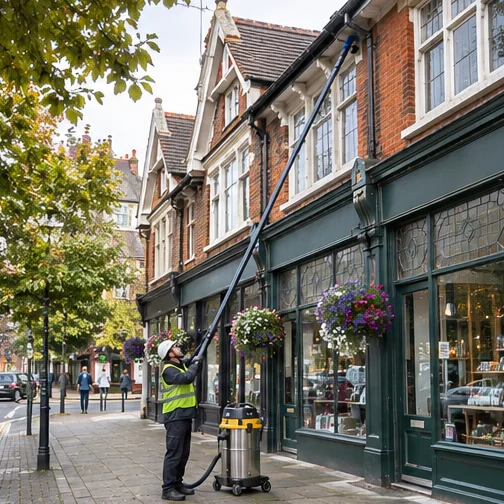
Illustrative photograph.
Describe the elevation by the path beside it
Camden’s Gospel Oak ward profile records the residential terraces around Oak Village and identifies Lismore Circus and Mansfield Road as neighbourhood centres. At some addresses the main entrance faces the street, while the gutter that concerns a resident overlooks a path, garden or court behind. Give both the address and the route to the particular elevation. A landmark such as the corner beside the ground-floor gate can help the building contact and the person attending refer to the same spot.
If the path runs beside a row of entrances, tell us how it is used during the day. A small court may provide access to several dwellings, and the people using it may enter from both sides. State whether there are steps down to it, narrow gates or a door that opens into the space below the gutter. Give the approximate width where the path is tightest. A wide picture of the elevation from the path, together with a view back towards the entrance, shows both the roof edge and the practical approach.
Pass the next observation to the right person
A site contact can use the visit record to distinguish the areas cleared from those awaiting access or further inspection. Ask the people who made the original report to check the same positions when it rains again, where they can do so safely. If the path is now dry but water appears at a nearby window, record that as a new location. If a low bend still wets the same wall, note whether the gutter itself was visibly overflowing at the same time. A report with a date, a place and the order of events is easier to act on than a general reference to leaking.
Some people who live above the affected area can see the roof but cannot tell what happens at the foot of the pipe. Others can see the base but have no view of the roof. Keep those perspectives separate when they come from different observations. A person arranging follow-up can compare the times and conditions and identify what remains uncertain. Where a gully or underground section needs an inspection, the roof-level record can be shared to show what was already reached during clearance.
Check what happens at the foot of the pipe
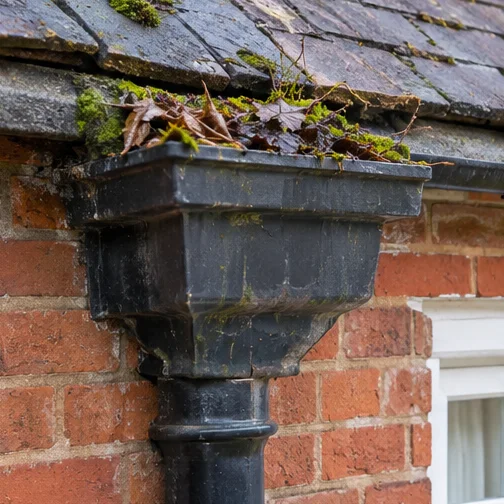
A pipe ending above an open gully can be observed from a safe position during rain. Notice whether water enters the gully, crosses its rim or spreads across the paving from somewhere else. A puddle at the foot of the wall can receive runoff from a path as well as water from the rainwater pipe. If the pipe continues into the ground, there may be no way to see where it goes without separate information or inspection. Tell us if the property has a drainage drawing or a record of earlier work at that point.
Where a pipe runs behind a balcony or enters an enclosed box, describe the visible lengths. A flow mark below a bend is useful if the bend can be identified in a wider picture. Note whether water appears there immediately or only once the rain has been falling for a while. Compare the pipe with the nearest roof edge and the position of the outlet. This can help tell whether the job needs to start with clearing a gutter, checking a connection or investigating a part of the drainage route that is out of sight.
- Terraced homes and shared courts
- Observations at both ends of a pipe
- Access around balconies and covered routes
- Maintenance records for residents and agents
Confirming access to the affected side
| Layout | Detail for the booking |
|---|---|
| Shared court with more than one approach | Name the usable entrance and who holds the key |
| Terrace with a private garden | Confirm permission and whether the route is through the house |
| Walkway beside several doors | Describe times and locations of regular passage |
| Roof above a covered area | Send a view showing the height and position of the cover |
Consider where ground-based clearance can reach
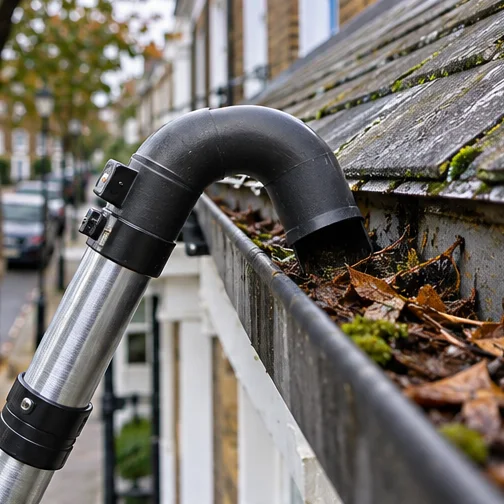
On an accessible length, gutter cleaning can remove leaves, twigs and sediment from the channel and visible opening. A ground-based vacuum needs a suitable position and an unobstructed line towards the gutter. The edge of a balcony, covered walkway or projection can affect the angle, even if the roof is relatively low. If there are trees or cables between the working area and the roof, show their position in your photographs. A different approach may be needed for a section above a lower roof or further back from the outside wall.
Where residents ask about several runs, list each one at enquiry stage. The rear extension and the front of a terrace can have different heights and access routes. For a managed building, identify which parts of the rainwater system the person booking the work is responsible for and who can authorise access to them. A resident’s ability to see a roof from their flat helps locate the issue, while permission to use the garden or court below may sit with someone else. Clear instructions help everyone understand what the visit can cover.
Separate work at the premises
Gutter cleaning
Clear accessible gutters and openings above paths, courts and extensions.
Ivy removal
Consider stems behind pipe fixings or crossing between properties.
Guttering repairs
Assess a local leak or loose support in relation to adjoining fittings.
Water damage repair
Compare ground-level and interior wetting reports before planning further investigation.
Gutter replacement
Consider compatible profiles where several lengths are worn or a junction needs renewal.
Gutter lining
Review support and outlet details before discussing a lining installation.
Gospel Oak observations by level
| What you see | What to add | How it helps |
|---|---|---|
| Water beside a path | Whether it comes from the pipe, gully or surface of the path | Identifies the first visible point at ground level |
| Wet wall below a bend | Which side of the pipe becomes wet first | Locates the concern near a specific fitting |
| Overflow from a high edge | Position of balcony, cover or extension below it | Describes the possible line of access |
| Mark inside a flat | Which surface is affected and when it changed | Helps place the interior observation beside the external layout |
Decide whether the visible problem needs another service
An opening that is clear after maintenance can still sit beside a split fitting, a failed bracket or a length that has moved out of line. Guttering repairs may be considered where the concern is local and the connected pieces are in suitable condition. If several parts have deteriorated, gutter replacement may be worth discussing. Show any junction between the affected material and a newer extension, because compatibility at that point affects the choice of fitting. Lining is assessed on the condition of the supporting channel, its shape and the outlet connection.
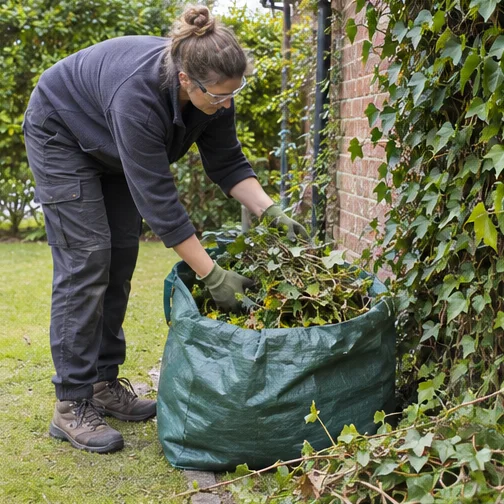
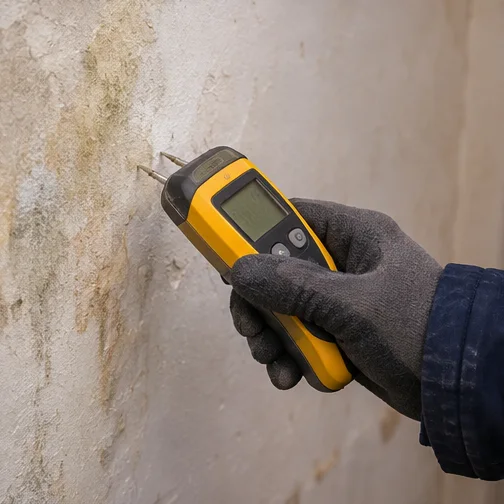
Climbing growth can obscure a leak or cover the part of a downpipe where a fixing has failed. Tell us if stems run behind the pipe, over a parapet or into a neighbour’s part of the building. The location and condition of the wall help determine how ivy removal might be carried out. When the concern includes damp indoors, keep the description of the interior mark alongside observations of the outside. Water damage repair depends on understanding the route of entry and the affected surfaces. This may require assessment beyond the gutters, particularly where the first sign is inside a flat and the connection outside is hidden.

What helps when several people report the leak
Coverage and bookings
See the areas we cover. For nearby enquiries, see Hampstead and Belsize Park and Kentish Town.
Gospel Oak gutter cleaning questions
Does a puddle by the wall always come from the gutter?
No. It can collect from the path, a gully or a pipe. Describe where you first see water moving and whether there is a drip from above at the same time. Those observations are useful when discussing what can be checked.
What if a resident only has a view of the gutter from a balcony?
A photograph taken safely from the balcony can help locate the roof edge. Include its position relative to the entrance and ask the building contact to describe the area below. The visit depends on suitable and agreed access.
Can you clear a gutter that runs past more than one doorway?
Tell us how the doors are used and how much working space is available. We can assess whether it is practical to reach the agreed length and whether arrangements are needed around the entrances.
Do you inspect the part of a pipe under the paving?
A routine clearance visit covers accessible gutters and agreed visible openings. If the pipe continues below the paving and its condition is uncertain, further drainage investigation may be appropriate. Share any available records of the buried route.
Why would an upper outlet need checking if a lower roof overflows?
An upper pipe may deliver additional water to the lower roof. The lower section also has its own discharge route. A view of both levels helps identify how they connect and which part needs attention.
Can the managing agent use the record for further repairs?
Yes. The record can refer to visible defects and explain which lengths were reached. Share it along with any new rain observations so the person assessing the repair can identify the relevant part of the building.