
Gutter Cleaning Seven Kings
We clear accessible gutter runs in Seven Kings and check reachable downpipe openings. If you have noticed water dripping from the underside of the gutter rather than coming over its front edge, tell us where that starts. A photograph including the full length and the closest outlet helps us plan what to check and how to approach it.
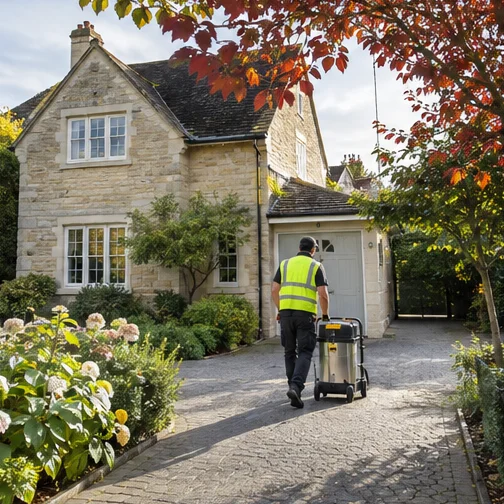
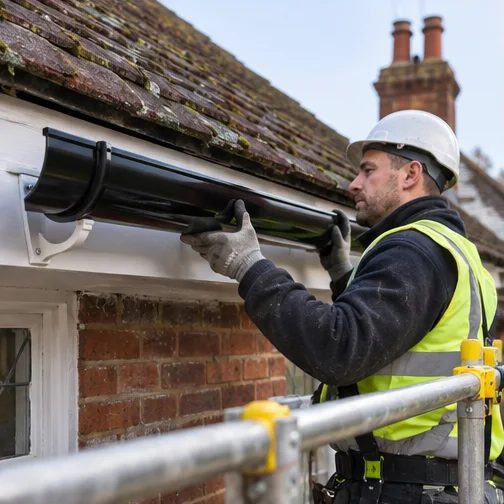
Illustrative photograph.
Identify the usable ground rather than the point where the drip lands
The best position to reach a gutter may be to one side of the reported drip. If the run sits over a bay or canopy, show the distance from its edge to the ground you can use. Tell us if a driveway, narrow passage or shared gate affects the route to that position. We consider both where the operator can stand and how the equipment can be brought in.
If the same gutter can be seen from a garden but the only route is through the house, explain the doorway and any steps. A clear view does not guarantee there is suitable space beneath the run. At a property with more than one occupier, tell us who can give access and who should receive the findings. Where an entrance needs to stay available, let us know how it is used.
- Show the underside drip and nearest outlet in one view.
- Describe the position below any bay or canopy.
- Tell us whether the leak started after an earlier repair.
- Identify how the side or rear can be opened.
Describe how water leaves the visible gutter
Water may cling to the underside of a channel and fall some distance from the seam where it escapes. Tell us whether it first appears directly below a joint, behind the gutter or at the edge. If the nearest outlet is farther along the same run, show where it sits. If another lower roof receives the water, include that edge in the picture as well.
When the leak appears only during longer rain, tell us whether you first see water at one fitting or along much of the gutter. That helps us distinguish a local issue from water rising in the channel. We check reachable debris and connections before discussing anything that might need a separate inspection. Tell us if the leak started after a repair or if the water now appears at a different position from before.
Match the drip to a reachable section
| What you notice | What to show | What we check |
|---|---|---|
| Water falls from the underside | First visible seam and nearest outlet | Reachable channel and fitting |
| Water spills along the edge in prolonged rain | Direction of the run and pipe position | Accessible channel and opening |
| Wet wall appears behind a joint | Where it starts relative to the roof edge | Visible connection and surrounding length |
Check the reachable channel and outlet together
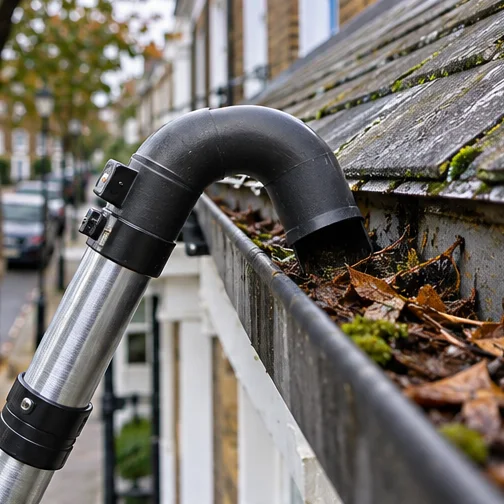
Where suitable, we use reach poles with a gutter vacuum to collect leaves, moss and compacted material. We follow the agreed length and check corners and the areas around outlet openings. Material farther along the channel can affect the position where water spills. We clear the accessible sections and identify which opening serves the run. If one position does not reach the entire length, we explain what needs discussing for the part beyond it.
We check a reachable opening and remove what we can from that position. If an enclosed pipe appears restricted below the visible opening, we discuss what may need a separate look. Ask about a camera view if you cannot see the channel from the ground or want to inspect a fitting behind the roof edge. We can discuss whether the view would identify the position you described.
Explain the result using the first visible location
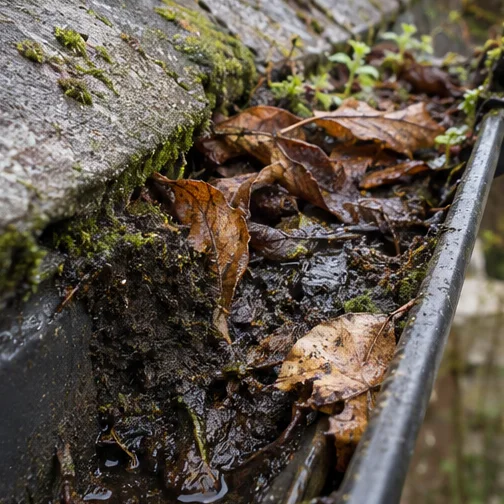
After clearance we describe which lengths and openings were reached and where we removed material. If a connection still appears faulty, we identify where it sits and explain what may need a separate inspection. If one part of the gutter could not be reached from the available position, we say which length and what limited access. Tell us who needs the findings if they were not there.
For a Seven Kings quote, include the postcode, approximate gutter height and a photo of the roof edge and ground below. Tell us whether the first water appears on the underside, at the back or over the front edge. If the outlet is around the corner, include its position separately. Mention whether a previous visit included the full length and whether a fitting has been changed since then.
If you only notice the drip from inside, ask which window or entrance the water is nearest. A wide photo from ground level can help locate the same position from outside. If a lower roof hides the top of the pipe, describe where the pipe reappears. We can use both views to agree the included gutter and inspect what can be reached.
When upper and lower gutters need separate attention
If the water seems to follow the underside of the run before dripping, note where you first see it on the gutter. A wide photograph can show the seam and nearby support, even if the exact entry point is out of view. Give us the position of any outlet around the corner and say whether the lower roof is part of the enquiry. We can use those details to agree a reachable length and explain what may need further inspection.
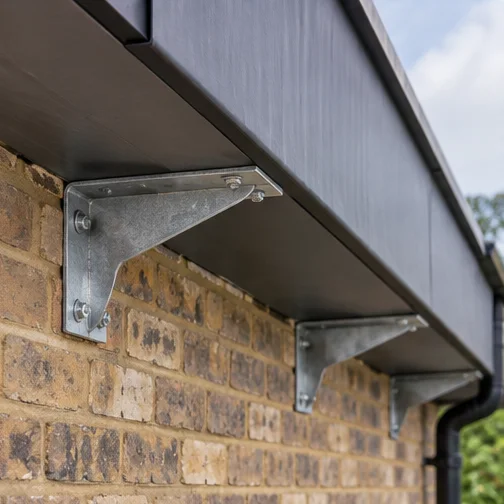
If the water runs past several brackets before it drops, identify the first bracket that becomes wet rather than the one nearest the puddle. A short video from a safe position can show the difference. Tell us if the outlet is still carrying water at that point and whether the same gutter was checked on an earlier visit. We can use the sequence to decide which part to inspect.
Inspect the fitting if water still escapes underneath
A drip below a seam can remain after accessible debris is removed. We can look at repairing the affected joint or support and what is visible of the neighbouring section. Where several lengths have failed, we can assess renewing the affected gutter and how it would meet the existing outlet. A supported channel with a failed inner surface may be considered for lining after its support and opening have been checked.
If ivy conceals the pipe or makes it hard to reach the affected joint, tell us what growth needs cutting back. We can discuss that separately. If water has already affected an indoor wall, water damage assessment is separate from gutter clearance. See our main gutter cleaning service for how we deal with accessible debris and report visible faults.
Agree a position for the booked length
| Area below the gutter | Detail to send | What we consider |
|---|---|---|
| Front bay | Projection and nearest level ground | Reach to the upper length |
| Side passage | Gate, width and changes in level | Route for equipment |
| Rear path | Keyholder and clear area beside the wall | Whether another position is available |
Other work on the extension and roofline
Gutter cleaning
Clear reachable debris and check the opening that serves the reported length.
Gutter replacement
Discuss how renewal would connect to the pipe or the remaining gutter.
Guttering repairs
Inspect a visible seam or bracket if a drip remains underneath.
Ivy removal
Consider cutting back growth that obscures the pipe or working area.
Gutter lining
Consider a liner after assessing a supported channel and its accessible outlet.
Water damage repair
Discuss an affected indoor wall separately from gutter clearance.
Coverage and bookings
See the areas we cover. For nearby enquiries, see Ilford and Goodmayes.
Seven Kings gutter questions
Can you check a drip that only appears beneath the gutter?
Yes, where we can reach the included run. Tell us where the water starts and where the nearest outlet sits.
Does a dry gutter edge mean it is clear?
No. Material can remain farther along the channel or around an opening. We look at what can be reached.
Can I send a photograph without getting onto the roof?
Yes. A ground-level view of the full run and pipe is useful. Tell us where the first drip appears.
What if the only route to the rear is through the house?
Describe the doors, steps and turns and tell us who can open them. We can discuss how the equipment might reach the working position.
Can a camera show the back of a joint?
Ask about a view of the fitting. The angle and roofline determine what can be seen.
Can you explain if the run still needs a repair?
We report what is visible after clearance and identify any connection or support that may need separate attention.