
Gutter Cleaning Slough
Send the complete postcode before arranging gutter cleaning at a property in Slough. Slough is outside Greater London, so Glen’s checks whether the address is covered before committing to a visit. Where coverage is available, we can discuss cleaning accessible gutters and checking reachable downpipe openings. Include the type of premises, the roof height and a photograph of the affected side when you enquire.
At premises with a loading door, the place where rain falls can be close to where staff have to move stock. Tell us which door is affected and whether water drops from its canopy, runs down the cladding or collects on the ground outside. For a home, use the nearest door or window to identify the affected gutter and show how we would reach the area from the entrance.
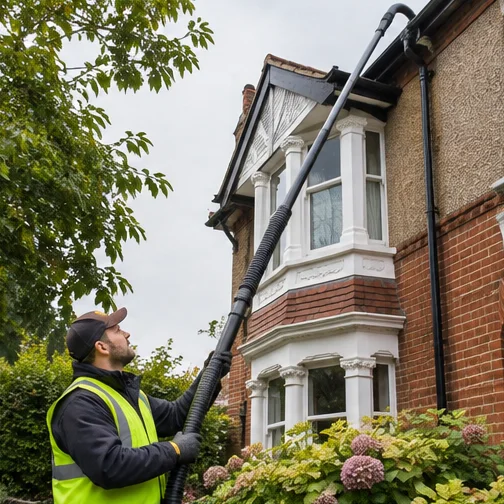
Illustrative photograph.
Check how the working area is used
Ask the person who runs the site when the doorway and nearby yard can be available. A bay can be empty between deliveries while the area directly in front remains in use for manoeuvring. Tell us which doors need to stay open, how staff reach them and whether a neighbouring unit uses the same route. If there is a separate sign-in point for visitors, include its location and the contact who can take us to the relevant side.
Photograph fixed equipment, loading ramps and protective rails near the wall. Include any part of the ground that changes level at the doorway. If a skip or trailer moves during the week, show where it will be during the proposed visit. The location of the gutter and the availability of the ground have to be assessed together. A photograph from a site plan or a letting listing may miss changes since it was taken.
- Confirm coverage using the full Slough postcode
- Mark the relevant door or bay below the gutter
- Identify vehicle routes that need to remain open
- Show where the pipe disappears behind a guard or cladding
Identify the roof edge above the loading door
Stand far enough back to see the height of the main roof and the position of any canopy. Include the next bay if it shows where the gutter continues. A drip at the corner of a canopy may come from a channel built into its edge or from water reaching the canopy from higher up. Note which part becomes wet first. If you can see water flowing during rain from a sheltered position, send a short recording and a wider daylight view.
Give the reference used by the people who work there, such as a bay number or the door beside the goods entrance. A close photograph of cladding may look like several parts of the same building. If the site manager has marked the area on a plan, send that too. We can match the relevant roof edge to the proposed scope for gutter cleaning and explain what we can assess from the available access.
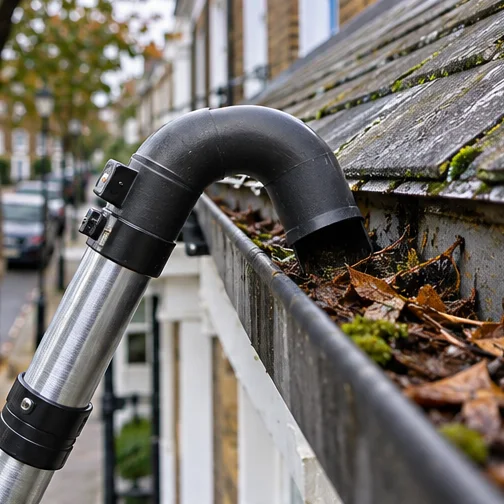
Information for a Slough enquiry
| Detail | What to provide |
|---|---|
| Coverage | Full postcode and address for the visit check |
| Door or bay | Site reference and a wide view showing the roof above it |
| Working area | Current delivery routes, fixed obstacles and changes in level |
| Pipe and gully | Visible upper and lower pipe sections and any shared discharge point |
Follow the pipe past guards and cladding
At a loading area, a downpipe can run behind a protective frame or enter a boxed section before reaching the ground. Photograph the visible portions above and below the obstruction. If there is a hopper or branch from another roof, include that connection. A pipe that ends over a gully can be checked visually at its discharge, while a pipe that enters the ground may leave little of its lower route visible.
During rain, note whether water runs down the outside of the pipe or emerges around its base. Water on cladding can appear to come from the pipe until a wider view shows that the streak begins beside it. If a gully rises, record any other pipes or yard surfaces that feed the same point. We check reachable openings within the agreed clearance. A concealed connection, lower pipe or underground drain may need separate investigation.
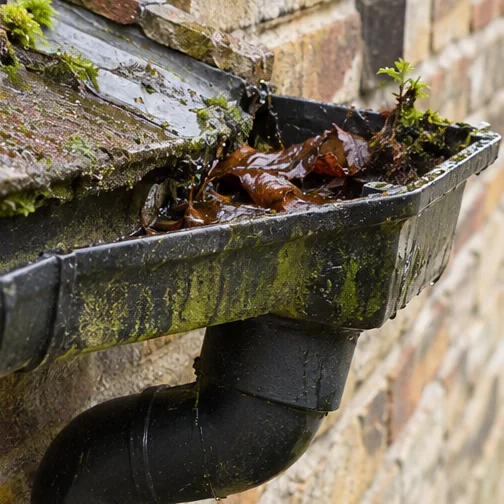
Make the site record useful for the next report
Use the same bay or door number when collecting later photographs. Give the date, whether the rain had just started and how long water remained outside the door. If the interior was affected, mark the height of the first wet spot and whether it appeared above the opening or at the threshold. A water damage repair enquiry can use those details with the exterior view to consider visible routes.
For a home, describe the room affected and its relation to the nearest gutter, roof junction or downpipe. Mention any alteration to the porch, paving or roof since the last time the symptom occurred. For a commercial site, give a maintenance reference if it will help the person meeting us identify the agreed work. In either case, confirm that the full postcode has been checked before fixing a date around deliveries, access notices or another contractor.
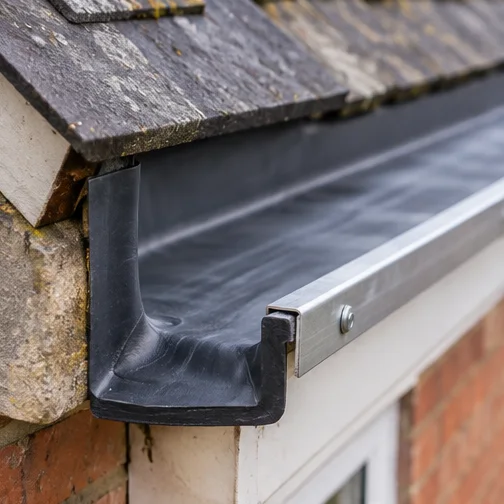
When upper and lower gutters need separate attention
Assess what remains visible after clearance
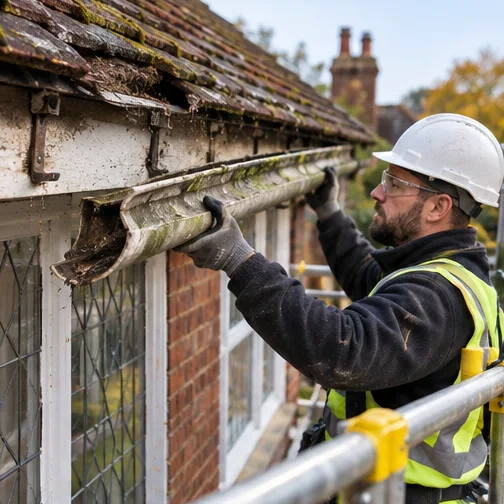
An accessible channel can hold silt or loose material around an outlet, and a clear can expose the rim or a nearby joint. If a fitting is visibly distorted, show its position in relation to the supports and the wall. Where water is coming from under the channel, a picture can show whether it leaves at a seam or travels along the underside first. This helps describe the issue when discussing guttering repairs.
For gutter replacement, identify the lengths proposed for renewal and the outlet they would connect to. An adjoining canopy may need to keep its discharge while another part is changed. If an older section passes into another unit, find out who is responsible for it and how they can provide access. A proposed repair or replacement requires an assessment of the relevant fittings and a scope of its own. Keep the clearance record available so any sections that could not be reached are identified.
What different reports can show
| Report | Evidence to collect |
|---|---|
| Water falls onto a loading area | Where it leaves the upper gutter or canopy edge |
| A streak crosses cladding near a pipe | The first wet point and the pipe connections above |
| Water collects against the threshold | The direction it travels across the yard and the nearest gully |
| A fitting appears bent | The nearby supports, joins and position above the ground |
Other work on the extension and roofline
Gutter cleaning
Subject to postcode confirmation, clear reachable gutters agreed for the home or premises.
Gutter replacement
Review replacement lengths and their connection to a shared roof outlet.
Guttering repairs
Assess a visible distorted fitting above the marked loading or entrance area.
Ivy removal
Check accessible plant growth reaching a pipe or outlet along the site boundary.
Gutter lining
Assess the channel and support above a canopy before discussing lining.
Water damage repair
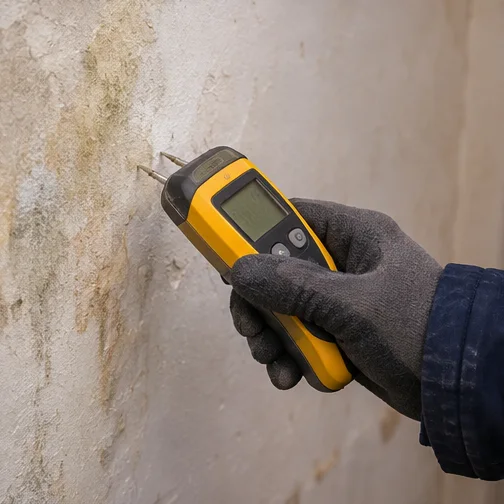
Review the route by which water reaches cladding, a doorway or an interior surface.
Coverage and bookings
See the areas we cover.
Slough gutter cleaning FAQs
Can you confirm coverage from the town name?
Please send the full postcode. We check the address before agreeing a visit outside Greater London. Tell us the type of building and which roof edge needs attention so the work can be assessed too.
Can you clean the canopy over a loading bay?
We can assess a reachable canopy gutter once coverage has been confirmed. Send photos showing the canopy, its outlet and the roof above. Include when the bay must be available for vehicles.
Do you also take enquiries for houses?
Yes. Send the complete postcode and show the affected gutter and approach. Mention a shared drive, garage or gate if it affects the working position.
Can we keep a delivery door open during the visit?
Tell us when the door has to be used and what space it needs outside. We can review access to the agreed gutter and discuss whether a different working window is needed.
Can you check a pipe that runs behind cladding?
We can assess reachable openings. Send pictures of the visible sections and say where the route goes out of view. A concealed part may require separate access or investigation.
What if the gutter was cleared recently but the door is still wet?
Send the earlier record if it identifies which roof edges were cleared. Record where fresh water appears first, including whether it reaches the threshold across the ground or from above. This can help establish what should be assessed next.