
Gutter Cleaning Greenwich
If water spills from the open top of a rainwater hopper in Greenwich, show us the pipes that feed it and the section below it. A hopper is a box or funnel on the wall that collects water before it enters a downpipe. When several roof edges feed it, it can be hard to tell from a wet patch alone which section needs attention. Glen’s clears accessible gutters and checks reachable downpipe openings. We assess the roof layout and the available working positions before agreeing what the visit will cover.
Give the full postcode and describe the wall where the water appears. Include the hopper in a wide photograph and point out the nearest window, step or entrance. For a house with a lower ground floor, tell us whether the pavement and front door are at the same level. A separate view of the area below the railings can help show whether the wall can be approached from inside the property.
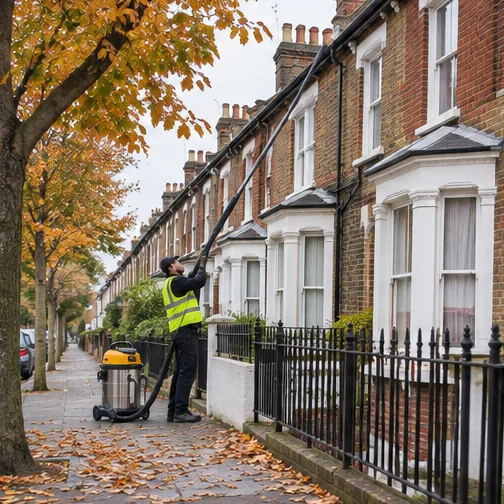
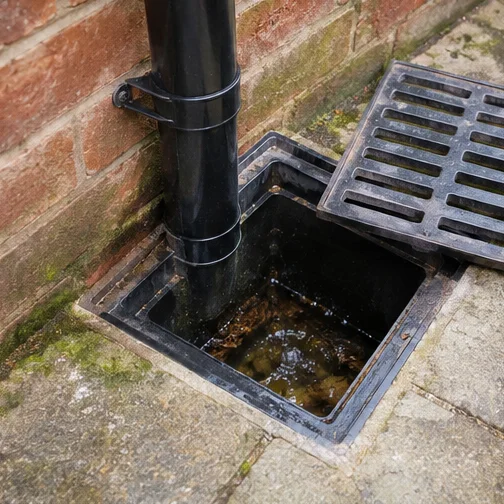
Illustrative photograph.
Details for a Greenwich gutter enquiry
| Detail | What helps us assess it |
|---|---|
| Hopper | A wide wall view and a closer image of the visible inlets |
| Lower frontage | Steps, railings and the approach to the wall from ground level |
| Pipe base | The lowest visible connection, gully or point it goes below paving |
| Shared access | The person who can open each entrance and identify the affected wall |
Identify what enters the hopper
Stand far enough back to see the wall above the hopper. A short outlet may come through a raised roof edge, or a pipe from another roof may bend down into it. Some hoppers have more than one visible inlet. Show them together so their positions are clear. If a pipe disappears behind a projection, mark where it goes out of sight. An image from the side can show a connection that is hidden in a straight view of the frontage.
During rain, note whether water emerges from one inlet, rises to the rim or escapes from the underside. If you can only see it from indoors, take a wide picture from a safe place afterwards and point to the same fitting. We can use those views to discuss gutter cleaning and which openings are reachable. Knowing the hopper position helps us describe the work even if an upper channel itself is concealed.
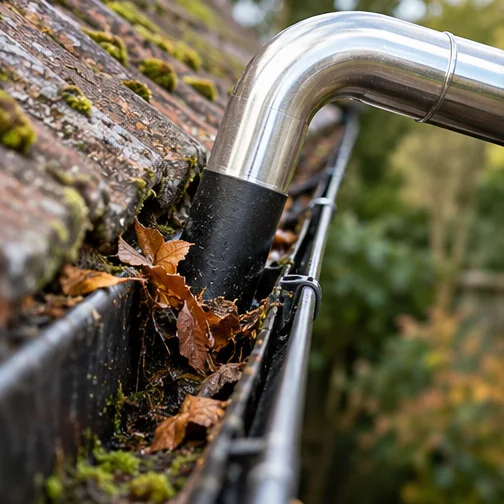
Compare the upper overflow and the pipe below
If the hopper appears full, check whether there is a visible leak below it too. Look from the ground at the first bend and the lowest exposed part of the pipe. Photograph water appearing at a joint if it can be seen safely. If the pipe empties into a gully at the bottom of the steps, note whether the gully fills at the same time as water reaches the hopper rim or separately.
We check reachable openings within the agreed clearance. A pipe behind a wall or below paving may need a separate investigation when the visible signs point further down the route. If water enters a lower ground-floor room, record whether the first wet point is above or below the outside ground level. The timing and position are useful for a water damage repair enquiry, particularly when the top and bottom of the rainwater system are both close to the affected room.
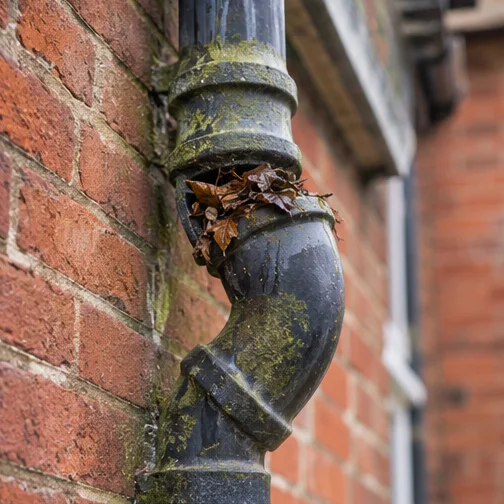
Show the levels below the wall
Railings can enclose a lower ground-floor area under a gutter. Photograph the top and bottom of the steps and the surface behind the railings. Let us know whether access depends on entering the building or whether a gate leads straight to that level. A narrow strip beside a window can look like an open frontage in a picture taken from the opposite pavement. An image from inside the boundary can show the difference.
If the door or the steps serve another household, tell us who uses them and when access can be arranged. Mention anything that projects from the wall, including a bay, a canopy or a light fitting. If the pavement is the only place with a direct view of the hopper, show how it is used by pedestrians and where the property boundary sits. We can discuss any access arrangements needed before fixing the visit.
- Identify the roof outlets feeding the hopper
- Show both levels of the frontage and the route between them
- Compare overflow at the rim and damp near the pipe base
- Record which original fittings you want to keep
Discuss visible fittings and original features
If you want to keep an existing hopper or pipe, give us a photograph of the fitting and describe which sections are in poor condition. A hopper can still be in reasonable shape while its lower connection has shifted or a clip has come loose. A close picture of a drip is useful alongside a wider view of the inlet and support positions. Where a fitting is accessible, we can discuss guttering repairs after establishing the visible condition.
If you are considering gutter replacement, say whether you want a new length to discharge to the existing hopper. The supporting wall, outlet height and pipe route can affect how a new section connects. When the appearance of the fittings matters to you or to someone managing the building, identify what is to be retained and share any specification that has already been agreed. Photos showing the profile and the connections help record those details before decisions are made.
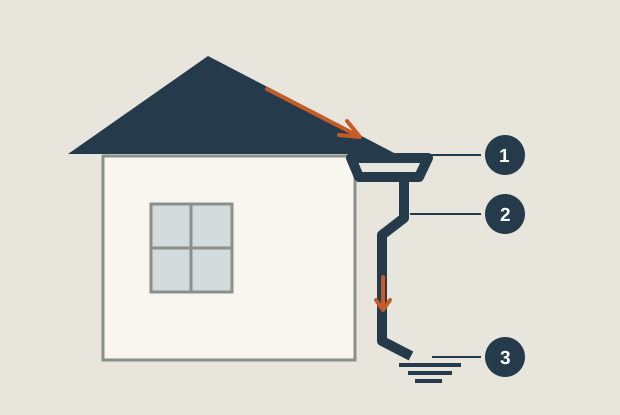
Services for the building manager
Guttering repairs
Assess a visible loose clip, shifted socket or leaking connection.
Gutter cleaning
Clear accessible gutters and hopper openings included in the agreed visit.
Water damage repair
Compare indoor damp with the height of outside openings and visible rainwater fittings.
Gutter replacement
Plan replacement lengths around an existing hopper and its inlet height.
Gutter lining
Assess the channel and its connection to a hopper before discussing lining.
Ivy removal
Review ivy where it has climbed through railings to a pipe or hopper.
Information to keep with the maintenance record
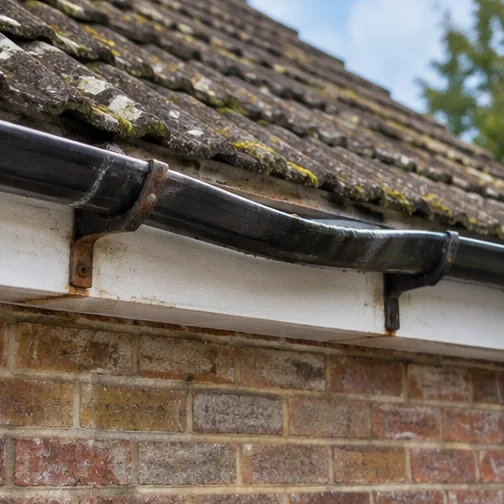
Signs to record when rain reaches a hopper
| Observation | What to show |
|---|---|
| Water crosses the front rim | The inlets and how the water level changes |
| Drip forms underneath | The outlet socket, first bend and pipe supports |
| Damp appears near a lower window | Its height and position relative to the outside drainage |
| Gully rises after steady rain | Which pipes and surfaces drain towards it |
Give future enquiries a clear reference point
Keep the date and location with any photograph from the visit. If a record refers to the front hopper, add the window or steps below it so it can be identified later. At a building with several roof levels, say which channel fed the fitting if that was visible. The distinction helps a later contractor see whether a new report involves the same outlet or an unrelated gutter nearby.
For a building with several occupiers, confirm who can approve additional access if a section needs a closer look. The person who spotted the overflow may be different from the person who can unlock the lower entrance or arrange access to a shared area. Share the scope and any relevant photographs with the person arranging follow-up work. If another leak appears, record the first new wet point and whether water is still spilling from the same hopper.
Greenwich gutter cleaning FAQs
Can you clear a hopper as part of the visit?
We can assess a reachable hopper and agree the relevant openings with you. Show what feeds it and the part of the pipe directly below. Tell us whether the adjoining roof channel is visible.
Do you need access to the lower ground floor?
That depends on the position of the affected gutter and the route to it. Show the steps, railings and available ground. Tell us if the only access is through another occupier’s space.
Can an upstairs photo show where the hopper leaks?
Yes, if it shows the fitting and is taken from a safe position. Send a ground-level view too, as that shows the wall, possible working areas and pipe route.
What if water is coming from the pipe at ground level?
Photograph the connection and note whether the hopper also overflows. We can assess reachable openings. An enclosed or underground part may need separate investigation.
Can a damaged hopper be repaired without changing every gutter?
A local repair may be possible depending on the condition, support and adjoining connections. Send pictures of the hopper and the lengths feeding it so we can discuss what needs assessment.
Can you include a rear gutter on the same visit?
Yes, where access is suitable. Send a rear photograph and describe the route around or through the building. Mention any separate keyholder and which gutter is affected.
Coverage and bookings
See the areas we cover.