
Gutter Cleaning Totteridge
At a Totteridge house approached from higher ground, you may be able to see the front eaves easily while the same roof sits well above the rear garden. That difference matters when you want a gutter at the back cleared. Glen’s provides gutter cleaning in Totteridge for accessible rainwater systems. Tell us where the affected edge is, how the ground changes between the entrance and that side, and which roof or fitting first shows the spill. A broad view of the wall and garden is useful at the enquiry stage.
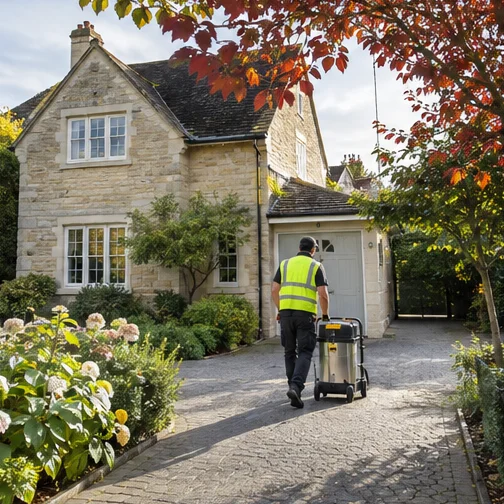
Illustrative photograph.
Follow the short run around the wing or porch
An addition can have a roofline that intersects the main house at a different height. A short gutter at the junction may turn behind a porch or take water from an upper pipe. If you see a spill at the lower edge, show how it sits relative to the original roof. Tell us whether water first arrives from above or becomes visible at the lower outlet. A close view of a wet window may omit the pipe behind the porch. Use a view that includes the whole side when possible.
For a roof with several pitches, water may fall along one edge before it reaches a gutter further down. A drip near the corner of a wing can come from an outlet around the return, out of view from the main garden. Describe which roof surface becomes wet first and where the visible pipe continues. At ground level, note whether it ends above a gully or goes through a wall or paving. A concealed connection or buried route may need separate inspection. Share any record of changes made when the wing or porch was built.
- Different ground levels from drive to garden
- Porches, garages and roof wings
- Eaves screened by trees or planting
- Records for access and repair follow-up
Describe the drop from the entrance to the garden
Barnet’s Totteridge conservation area description places the area along a gravel ridge, with ground sloping towards Dollis Brook and Folly Brook. For a property near Totteridge Village or Totteridge Common, the route within the plot is the detail we need. A drive may start near the level of the front door while a garden terrace steps down beside the house. Give the approximate height beneath the gutter itself and show what separates it from the nearest open ground. A photograph taken across the garden can show a change in level that is easy to miss from the road.
If the route uses a gate at the side, explain whether the path continues past the building or turns around a garage, hedge or retaining wall. Include the narrowest point and any steps or fixed cover. At a property with a separate garden entrance, give the route that has been agreed and the person who can open it. It may be possible to approach one wing from the drive and another from the garden. Describe each position if the visit is intended to cover more than one elevation.
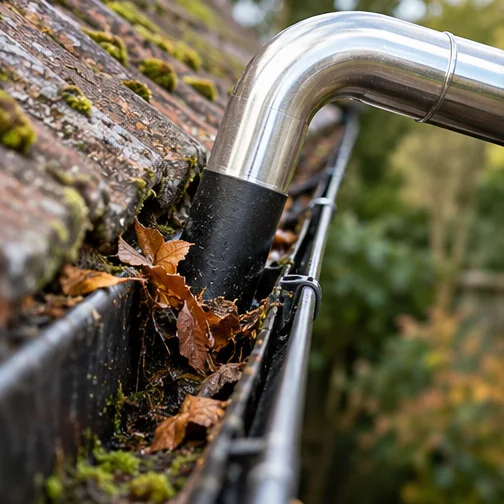
Totteridge roof and garden observations
| What you saw | Detail to include | Why it helps |
|---|---|---|
| Spill over a lower terrace | Height from the terrace and route from the drive | Describes the approach on the affected side |
| Water where a porch or wing meets the main wall | Position of the upper pipe and lower outlet | Shows how the two levels may connect |
| Gutter obscured by branches | Where branches cross the line to the roof | Helps assess the nearest suitable working position |
| Wet paving near a pipe | Whether it ends above a gully or enters paving | Identifies the last visible part of the drainage route |
Check which lengths can be reached from the agreed ground
Mature growth can affect the working position as well as the amount of material in the gutter. A branch beneath the eaves may interrupt the route of a pole while leaves collect near an outlet. Photograph the branch and roof edge together and show the area below. If a pergola or planted bank lies beneath the section, describe the nearest clear position. An apparently open lawn might be some distance from the part of the wall that needs attention.
During gutter cleaning, we remove loose material from agreed accessible channels and visible openings. A ground-based vacuum may be practical where the position, height and angle allow it. A camera can sometimes show debris at a corner or outlet. A channel behind a parapet or above a lower roof may require another approach. If the property is divided into flats or the route passes through a separately used garden, confirm who agrees the work and who can give access. For an adjoining route, establish permission before the visit.
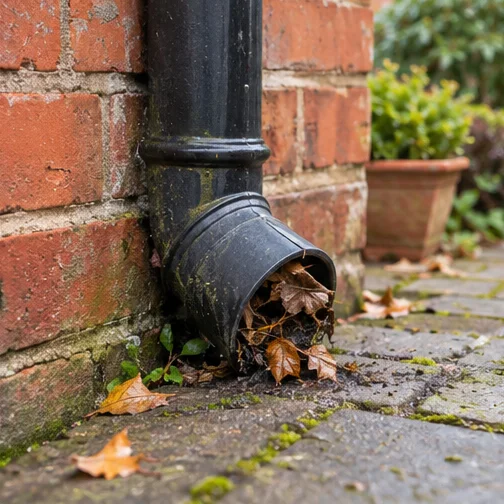
Identify the roof edge for future work
A clearance record can name which runs and openings were reached, where material collected and any visible fitting that needs another look. At a house with several wings, use a reference such as the outlet above the door beside the lower terrace. Someone who approaches through the drive instead of the garden can still locate it. Tell us who should receive the account and who can arrange a different approach to any remaining section.
After the next rain, look from a safe position for the original symptom. Note how long it took to appear and whether water first becomes visible at the same point. If the main channel no longer spills but a lower elbow still drips, record the two locations separately. If an indoor mark changes, give the date and nearest outside wall or window. The person arranging follow-up can compare the record with these observations and decide whether to look at the visible fitting, an enclosed connection or another part of the building.
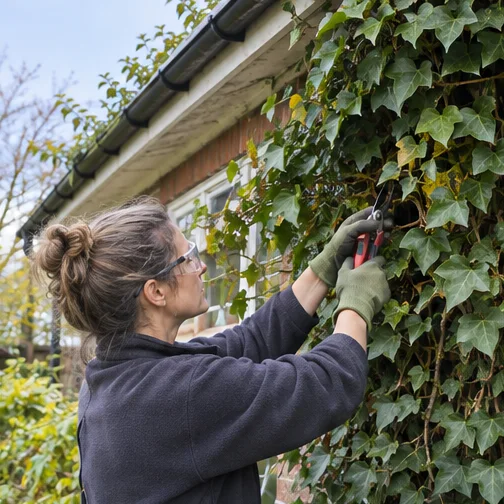
When upper and lower gutters need separate attention
Consider the existing fixings after material is removed
A channel can hold water beside a seam because a support has shifted, even if the visible opening is clear. Guttering repairs may be considered when a local joint, bracket or outlet can be assessed against the condition of nearby parts. If older lengths meet newer work above a garage or wing, send any records that identify the profile and what was changed. This helps locate the fitting and decide what can be retained.
Gutter lining can be considered where the support, channel shape and outlet details allow a suitable installation. Where deterioration extends along several pieces or fixings, replacement may need discussion. If ivy passes behind the pipe or enters a gap near the roof edge, describe where the stems start and the surfaces they cover. That gives a starting point for an ivy removal assessment. Water damage repair begins by identifying affected materials and investigating the route of entry. A damp mark inside a room can be compared with the nearest exterior feature, even if the path between them remains uncertain.

Access routes to agree
| Setting | Detail to confirm |
|---|---|
| Side path below a retaining wall | Gate width, steps and change in level |
| Gutter above a garage or porch | Position of the low roof and the nearest clear ground |
| Rear garden reached through another occupier’s area | Permission, route and key holder |
| Frontage near the ridge road | Where the agreed entrance and working area sit |
Other work on the extension and roofline
Gutter cleaning
Clear agreed accessible gutters and openings above terraces, side wings and porches.
Gutter replacement
Review replacement options if deterioration affects several runs or fixings.
Guttering repairs
Assess a visible seam, support or outlet in relation to the adjoining lengths.
Ivy removal
Review climbing stems around pipes and behind eaves.
Gutter lining
Assess existing support and outlet connections before considering lining.
Water damage repair
Use the timing and position of indoor wetting to guide investigation of exterior entry routes.
Coverage and bookings
See the areas we cover. For nearby enquiries, see Whetstone and North Finchley.
Questions about gutter cleaning in Totteridge
Which ground level should I use to describe the roof height?
Give the height above the position nearest the affected section. If the ground drops across the length, include the change between the ends. A photograph showing the wall and the ground can explain the slope.
Can you clear the short gutter over a wing without including the main roof?
Yes, if it is included in the agreed work and there is a suitable approach. Show where it discharges and whether it receives water from above. That helps assess the relevant connections.
What if a hedge hides the pipe but I can see water below it?
Describe where the visible water first appears and where the pipe is last visible. A photograph can show the hedge, wall and roof edge together. If access to the pipe remains obstructed, another arrangement may be needed.
Can a wet gully show whether a roof gutter is working?
It shows where some water reaches ground level, but a yard or path may also feed it. Note whether the water arrives from the pipe or from the surface around it. A concealed connection may need separate assessment.
Should I tell you about work done when a garage was added?
Yes. A previous project may have changed a roof outlet or a connection below paving. Share the part of the record that shows where the gutter or pipe now goes.
What if the wall stays marked after the leak has stopped?
Keep a dated photo and distinguish the existing mark from any new wetting. If the area changes after rain, record the first wet point and the nearby fitting so the person arranging follow-up can locate it.