
Gutter Cleaning Tolworth
If rain collects outside a low doorway in Tolworth, look for the route it takes before it reaches the threshold. It may fall from a gutter, leave a pipe close to the wall or cross the paving from another part of the property. Glen’s clears accessible gutters and checks reachable downpipe openings. Send the full postcode and a picture of the roof edge, doorway and ground between them so we can agree which sections to assess.
Tell us whether the entrance is at the bottom of a drive, steps or a short ramp. Mark the spot that becomes wet first. If the property has more than one roof draining towards that side, show the nearest outlet for each one. A photo taken after the rain can help place a short recording of the water in motion.
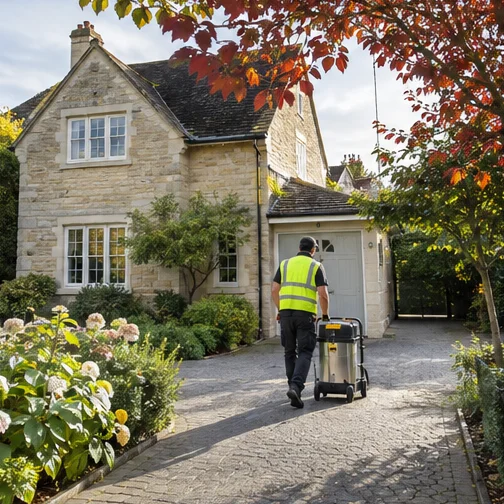
Illustrative photograph.
Show the slope and the available approach
A sloping drive may be the only route to the affected wall. Photograph it from both ends and show the transition to any flat area beside the house. Include a dropped kerb, raised edging or cover if it affects the usable space. If a vehicle normally sits below the gutter, say where it can be moved. A driveway can be open at the entrance while the area nearest the wall is restricted by a porch or a boundary.
If access to the rear branches off the drive, show the gate, steps and any tight turn. Tell us who can open the route and whether it must stay available for someone else. Where the lowest point is at a garage door, include the clearance on either side rather than relying on a photo of the door alone. We can use these details to consider which ground positions are suitable for the agreed roof edges.
- Locate where rain first crosses the driveway
- Show the available position near a low doorway
- Trace bends down to the last visible pipe connection
- Compare indoor wetting with outside levels
Observe the first flow across the surface
From indoors or a dry place, watch where water first crosses the paving. If it starts at the wall, look for a pipe base or drip directly above that point. If it comes from the open end of the drive, check whether it follows a kerb or channel towards the door. Record the sequence rather than guessing which fitting is responsible. Water can spread across the same patch by different routes during a single shower.
Take a wide photograph that includes the wall, roof edge and any change in ground level. The nearest gutter outlet is useful as a reference even if you are unsure whether it is involved. If you can see a lower roof or canopy over the door, include its full edge and where it drains. These views help us discuss the scope for gutter cleaning and where we can approach each accessible length.
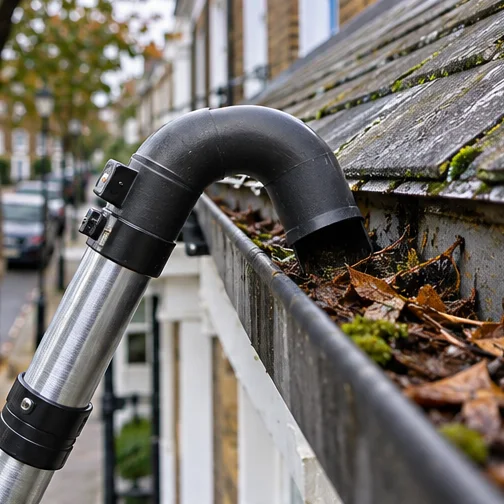
What to send for a Tolworth enquiry
| Detail | What helps us plan |
|---|---|
| Approach | Pictures showing the slope, usable ground and any fixed obstacle |
| Roof edge | Gutter, outlet and lower roof above the affected doorway |
| Ground discharge | Visible pipe base, nearest gully and direction of surface flow |
| First wet point | The place and timing of the first fresh water indoors or outside |
Trace the pipe through its visible bends
Follow the pipe down from the gutter and photograph the visible joins. A bend can direct water towards a gully or carry it past a projection to another part of the wall. Show the point where the pipe discharges or goes below paving. If another outlet shares the gully, include it in the same view. Tell us which roof you believe each pipe serves and where that is uncertain.
We check reachable openings within the agreed clearance. If water rises from below the pipe or comes through paving, an enclosed connection or a ground drain may need separate assessment. Note whether water appears at the discharge before the gutter starts to spill. If it crosses the ground from another direction before reaching the pipe, photograph that part of the route as well. This lets us discuss the roof-level work with the ground-level observations in view.
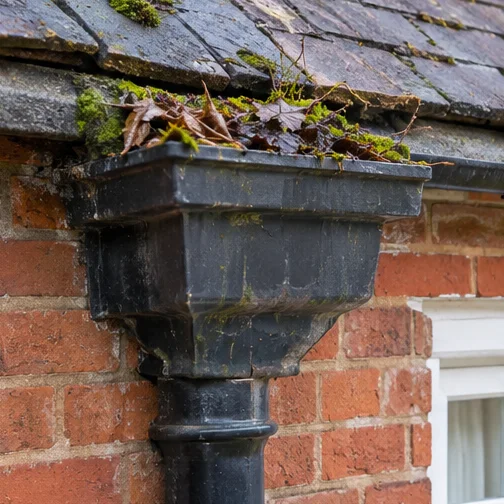
Specify any later fitting work separately
If clearance reveals a visible split, loose bracket or slipped pipe joint, we can describe where it sits. For guttering repairs, send a close picture alongside one that shows the length it connects and the next support. Tell us whether the fitting sits above a slope or on a wall with a clearer approach from the other end. The condition and access both affect what can be assessed in a separate visit.
If you are considering gutter replacement, show the existing outlet and the route it uses. Tell us whether another roof will continue to discharge into the same pipe and whether there are plans to change the paving or move a gully. A new gutter needs a suitable place for water to go. Keep the access photographs and record of visible connections so anyone planning the work can see what was agreed during clearance.
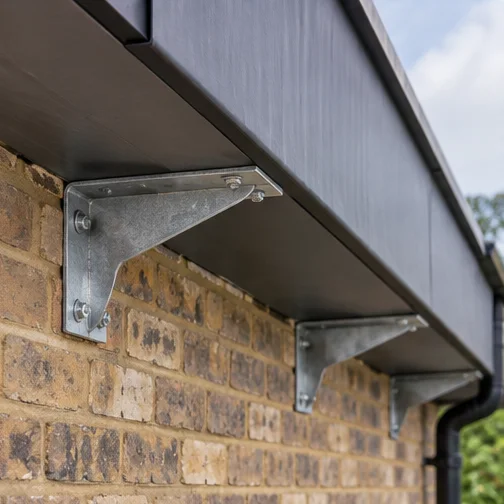
When upper and lower gutters need separate attention
Where a driveway channel crosses the entrance, photograph both ends and show where the nearest downpipe reaches the ground. Note whether water reaches the channel from the house side or from the street side. That makes it easier to describe a ground-level drainage issue alongside any visible gutter overflow.
Describe indoor wetting against the external levels
For a damp mark indoors, record whether it starts at floor level or higher on the wall. Take a picture of the corresponding outside point and include the lowest part of the doorway, nearby gully and any overhanging roof. If you see water reach the door from across the drive, show how it meets the step or threshold. If it starts at the top of the frame, include the gutter edge and the fittings above it.
For a water damage repair enquiry, give the date of fresh wetting and say whether it began during the shower or afterwards. Mention work to the driveway, door or drain if it changed the way water could approach. If the gutter has already been cleared, identify which lengths and openings were accessible. A report of an earlier clear helps only if it can be matched to the roof that drains towards the affected side.
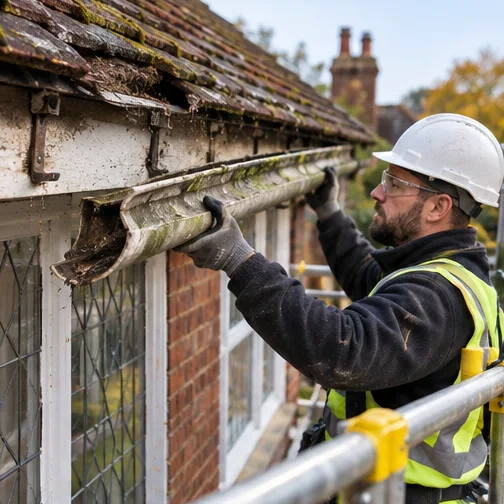
Observations near a low doorway
| What you see | What to record |
|---|---|
| Water crosses the drive towards the door | The direction it starts from and where the ground changes level |
| Drops form under the canopy | What drains onto it and where its own outlet sits |
| A gully rises beside the wall | Which pipes feed it and when it starts to fill |
| Damp appears above the frame | The matching outside location and any roof edge or pipe above it |
Other work on the extension and roofline
Gutter cleaning
Clear agreed reachable house and lower roof gutters from suitable positions.
Gutter replacement
Specify replacement lengths around the pipe route and planned ground-level changes.
Guttering repairs
Assess visible damage to a support, seam or pipe joint near the drive.
Ivy removal
Check where growth beside a driveway wall has reached a pipe or gutter.
Gutter lining
Assess the channel and outlet before considering lining above a sloping approach.
Water damage repair
Compare water at a low threshold with roof discharge and visible surface flow.
Coverage and bookings
See the areas we cover. For nearby enquiries, see Surbiton and New Malden.
Tolworth gutter cleaning FAQs
Can you assess a gutter over a sloping drive?
Yes. Send photographs from both ends and show any flat area nearby. Include the gutter height, any porch and where vehicles normally stand.
What if a garage door is at the bottom of the drive?
Show the door, paving and roof edges above it. If water reaches the threshold during rain, note whether it comes from the wall or crosses the drive from another direction.
Can you check a low pipe outlet during clearance?
We can check reachable openings included in the agreed work. Show the visible pipe and where it discharges. A below-ground connection may need separate assessment.
Can the porch gutter be booked separately?
Yes, if it can be reached. Show its outlet and the main gutter above. Tell us if water from the upper roof also reaches the porch.
Should I send a video of runoff?
A short recording from shelter can help if it shows the first point water becomes visible and where it travels. Send a wide daylight photograph too so we can locate the fittings.
Can you include another side of the house?
Yes, where suitable access is available. Send views of both roof edges and describe how to reach each one. Include any gate or lower roof that affects the approach.