
Gutter Cleaning Perivale
If water drips above a workshop’s back door in Perivale, identify the door and the route people take to reach it. A pipe may run beside the opening, while the gutter serving it extends across an adjoining bay. Glen’s clears accessible gutters and checks reachable downpipe openings. We use the roof and ground views to assess which lengths can be covered and where we can work.
Send the full postcode and a wide photograph of the side where water appears. Include the nearest gate, yard entrance or path. If the enquiry is for a house, show whether the affected gutter sits above the back door, an extension or a separate garage. The same approach helps us locate the fitting and establish who can provide access.
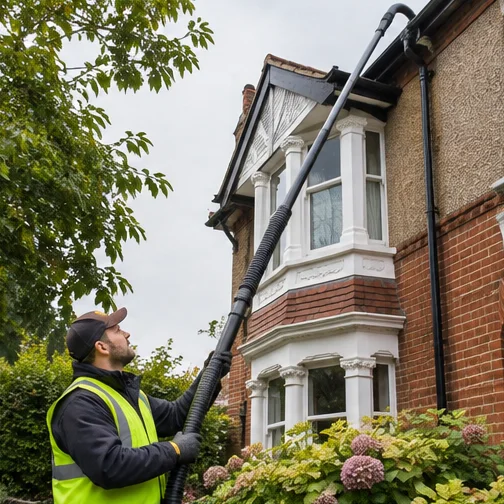
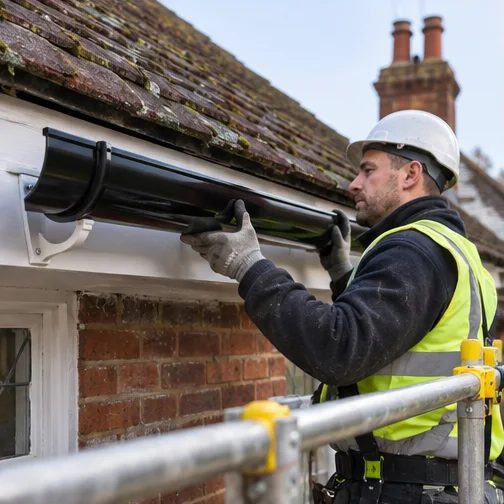
Illustrative photograph.
Establish when the service route is available
A door at the back of a workshop may be used for deliveries, staff access or moving waste. Find out when it has to stay clear and whether a different entrance is available. Tell us which area can be made available and who can agree that with anyone using the adjoining space. Photograph fixed barriers, cages, ramps and any step between the yard and the door. If a vehicle normally stands beneath the gutter, say whether it can be moved.
For a house, describe the path from the gate and include any narrow turn behind a garage or extension. If there is a second gate on the route, give the name of the person who can open it. An access route shown in an old photo may now be occupied by a store or fence. A current photo helps us assess the working position before we agree a visit.
- Mark the workshop door or house entrance below the affected gutter
- Check when the service area can be made available
- Trace exposed pipe sections above and below guards
- Keep the bay reference with any later wetting report
Use the rear door to identify the affected length
Mark the door and the gutter above it on a picture of the whole wall. Give the number or name people use on site if the back of the building has no street number. A view of the wall can show whether the gutter runs past the boundary with the next unit or stops at a different roof level. Include the nearest outlet, even if it lies away from the point where the water lands.
If you have a video of the leak, say where you were standing and what gets wet first. Drops can leave a high gutter, strike a sign or light fitting and reach the threshold from one side. A close image of the final drip may show little of that route. Send a wider view so we can place the evidence and discuss the accessible lengths for gutter cleaning.
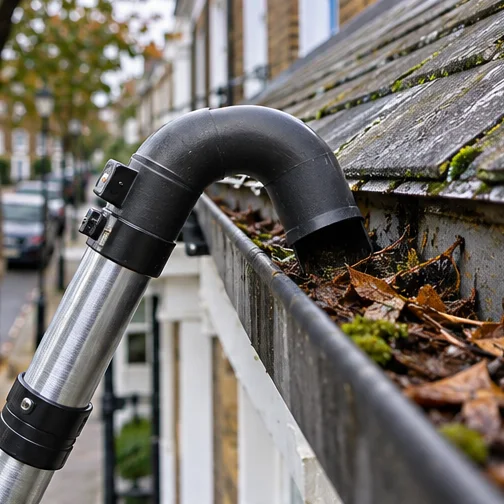
Information for a Perivale enquiry
| Detail | What to send |
|---|---|
| Door or bay | A name or number and wide picture of the affected wall |
| Service approach | Gate, ramp and areas required for people or vehicles |
| Rainwater route | Visible outlet, pipe connections and discharge point |
| First wet point | Where water reaches the wall or ground and how it spreads |
Check the visible route through a bend or hopper
Look for the outlet above the door and follow the pipe down to its last visible point. If a hopper receives water from more than one roof, photograph the connections and the gutter edges they serve. A pipe may pass behind a guard, canopy or cladding. Send a view of the sections above and below that point. Tell us if there is another downpipe serving an adjoining bay.
Photograph the discharge at ground level and include any gully it enters. During rain, observe whether water rises at the gully before the upper gutter starts to spill. If the yard slopes, show whether surface water also reaches the same point. We can check reachable openings within the agreed clearance. An enclosed connection or a restriction under paving may require separate investigation.
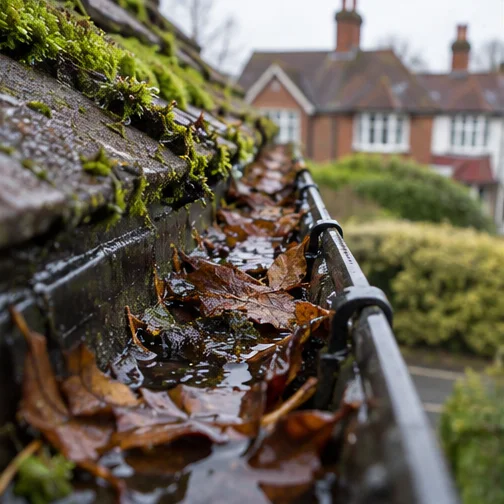
Keep the clearance record with reports from inside
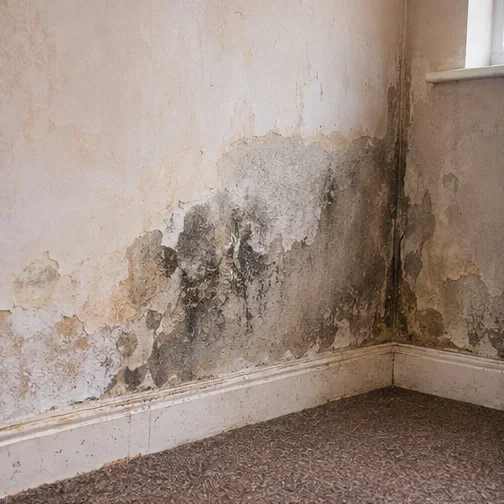
When damp appears around the door or on an internal wall, record the first wet point and give its height. Show the matching area outside with the gutter, pipe and threshold in view. A mark above the door can sit beneath a joint or canopy, while water at floor level can come from a puddle against the wall. Note which surface became wet first and how long it took after the rain started.
For a water damage repair enquiry, include the dates of fresh wetting and the roof edges or openings that were covered by earlier clearance. If the workshop contact changes, pass on the marked image, gate details and record of any inaccessible areas. That helps the next person determine whether a later report refers to the same bay or a different door with similar fittings.
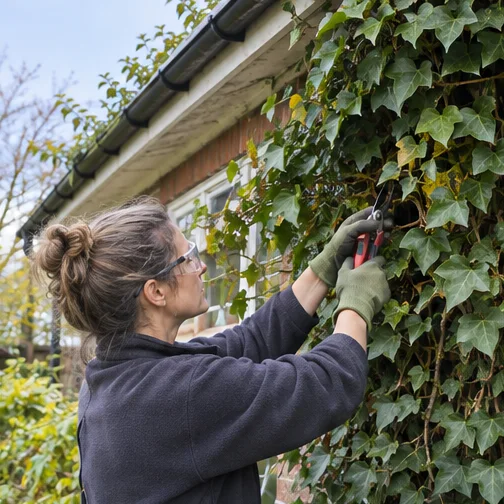
When upper and lower gutters need separate attention
Where two units use the same rear yard, show how the gate leads to each bay and identify which one is affected. The number over the front door may be hard to match to a rear shutter. A marked picture of the yard can connect the two and help the keyholder make the right part available.
If a shallow canopy sits above the rear door, show whether it is fixed to the same wall as the main downpipe. A side view can reveal a small channel tucked along the canopy edge. Note whether drops begin there or arrive from the larger roof, and tell us which doorway needs to remain usable during the visit.
Locate visible damage relative to the bay
If a support has pulled away or a seam appears open, include the nearest door and the connected lengths in the picture. We can describe visible defects after reachable debris has been cleared and discuss guttering repairs separately. If the fault sits near the boundary between units, tell us which person manages the adjoining section. The person who reported the water may be able to identify the fitting without having authority to arrange access to it.
If you are considering gutter replacement, specify which length is in question and where it discharges. Show the part of the existing pipe that will remain in use and any roof that also feeds it. Tell us if changes to the door, canopy or yard are planned. The size and position of an opening can affect the support and route for a new length, as well as the space available for the work.
What to note during rain
| Observation | Useful evidence |
|---|---|
| Water drops near the back door | The first point where it leaves a fitting or lower roof |
| A streak forms beside a pipe guard | Pictures of the exposed pipe above and below it |
| A gully fills near the bay | Incoming pipes and the direction of surface runoff |
| A fresh mark appears inside | Its height, timing and matching exterior position |
Other work on the extension and roofline
Gutter cleaning
Clear accessible roof gutters agreed for the house, garage or workshop.
Gutter replacement
Plan new gutter lengths around existing connections across a bay boundary.
Guttering repairs
Assess reachable damaged fittings identified by the relevant door or unit.
Ivy removal
Check where ivy has reached a pipe or channel from the rear boundary.
Gutter lining
Assess a channel above a service route and its outlets before discussing lining.
Water damage repair
Compare water near a workshop door with the visible roof, pipe and threshold.
Coverage and bookings
See the areas we cover.
Perivale gutter cleaning FAQs
Can you clear a gutter above a workshop door?
We can assess a reachable gutter. Send the roof edge and working area in the same picture and tell us when the door and approach can be made available.
Can the workshop stay open?
Tell us which entrances and ground areas have to remain in use. We can assess the position and discuss a suitable window for the agreed gutter lengths.
What if a different occupier controls the rear gate?
Confirm who can open it and when. Give the occupier the marked photograph so they can identify where access is needed. Tell us if anyone else uses the same route.
Can you include the house or garage gutter?
Yes, where the relevant lengths can be reached. Show each roof edge separately and explain whether a side gate, garage door or shared path is needed.
What if the pipe runs behind a cover?
Show the parts above and below the cover. We can discuss reachable openings and whether separate access is needed to check a concealed section.
Can you use a report taken after rain?
Yes. Show the wet area and the roof edge above it, and note when the water first appeared if anyone saw it. A wide picture lets us locate the report on the building.