
Gutter Cleaning Roehampton
Water falling across an outdoor stair in Roehampton can affect several homes even when the leaking gutter serves one side of the building. Show us the flight of steps, the landing and the roof edge in the same photograph if possible. Glen’s clears accessible gutters and checks reachable downpipe openings. We use the roof and ground views to agree what can be reached and which access arrangements are needed.
Send the full postcode and identify the entrance or stair used by the people who reported the water. If the building has several similar approaches, mark the affected one in a wide photograph. For a house, show the closest gate and explain whether the gutter is over the main path or can be approached from another part of the garden.
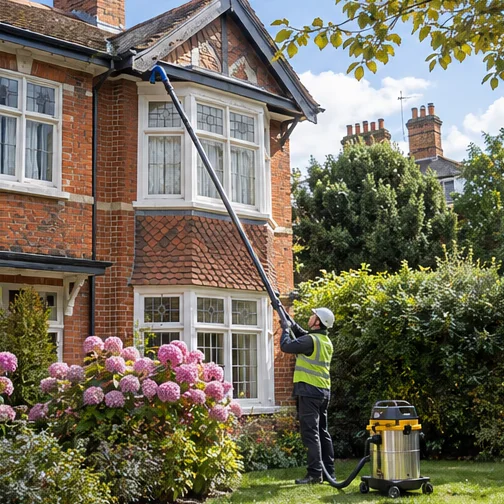
Illustrative photograph.
Work out who needs to use the landing
Tell us whether the stairs lead to a private door, a shared entrance or more than one landing. Find out when the route is used and whether there is an alternative. A gate, handrail or outward-opening door can reduce the usable space once somebody needs to pass. Photograph the top and bottom of the steps and include the surrounding ground, not just the place where water lands.
If access depends on a resident, caretaker or managing agent, give us the contact who can open the relevant area. Confirm whether they can also identify the affected gutter. A key to a common entrance may open the stairs without providing access to the yard beneath them. Show that route separately if it offers a better approach to the roof edge.
- Mark the affected stair or landing on a wide photograph
- Check who needs to use the route during the visit
- Trace visible drainage above and below the steps
- Label fresh wet marks by floor and entrance
Identify the visible drainage above and below the landing
Look for a downpipe at either end of the wall and photograph where it leaves the upper gutter. If a branch comes from a canopy or another roof level, include the connection and the edge it serves. A pipe passing behind a stair can reappear on another level. Show the last visible part above the stairs and any exposed section beneath them.
At ground level, note where the pipe discharges. If it enters a gully, show any other pipe or surface feeding the same point. Tell us if water rises there before the gutter starts to overflow. We can check reachable openings as part of the agreed clearance. An enclosed connection or drain beneath paving may need separate investigation. Include the visible route water takes along the ground when it reaches a doorway or the foot of the stairs.
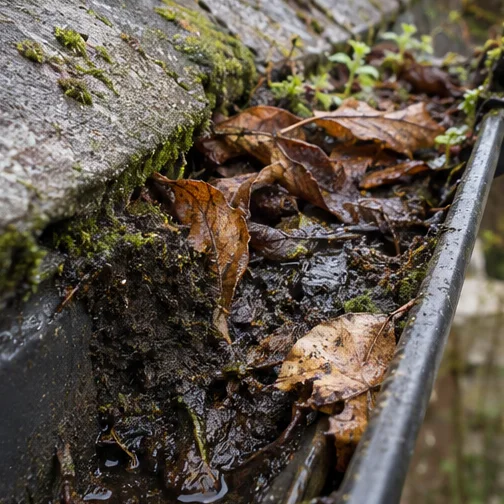
Find the first drip above the stair
During rain, watch from indoors or another sheltered position and note where drops first cross the steps. Water may spill directly from a gutter, strike a canopy or run down an external pipe before reaching the stair. A recording from the top may show where the water lands. Include a separate view from the bottom showing the entire wall so the source can be located.
When the rain stops, look for a wet streak on the nearest wall and photograph its highest visible point. A rail or ledge can carry water sideways before it falls. Show any projecting roof above it and include the nearest outlet. These observations help us discuss the reachable lengths to include in gutter cleaning, particularly where one canopy sits beneath another roof.
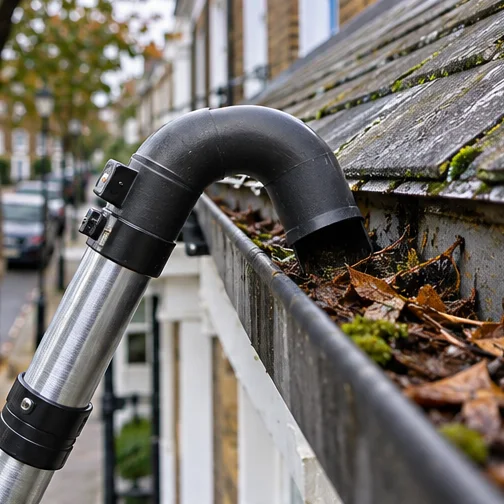
Work for other parts of the rainwater system
Gutter cleaning
Clear the agreed reachable gutters above the stair, home or canopy.
Gutter replacement
Plan new lengths around existing pipe branches and shared approaches.
Gutter lining
Assess a channel and outlet before considering lining near a landing.
Guttering repairs
Assess a reachable faulty seam, bracket or outlet above the marked stair.
Water damage repair
Compare indoor wetting with the visible stair, roof edges and outlet.
Ivy removal
Check where plant growth beside a rail or low wall reaches a rainwater fitting.
Information for a Roehampton visit
| Detail | What to send |
|---|---|
| Stair reference | Entrance number or a marked photo of the affected flight |
| Available ground | Top and bottom approaches, gate and working surface |
| Roof edges | Main gutter, canopy and the nearest visible outlets |
| Water route | First wet point and how water reaches the stair or wall |
Put a visible fault on the building record
After reachable material is cleared, we can describe visible signs such as a shifted outlet, loose bracket or open seam. Photograph the fitting along with the stair or entrance below it. The location helps distinguish a loose pipe clip at landing level from a high gutter support. If you want to discuss guttering repairs, tell us which person can arrange access for a closer assessment.
For gutter replacement, show which lengths need assessment and which discharge route must stay in use. A shared pipe can serve several roof edges, so record any visible branches and the occupiers who use the space beneath them. If planned work to the stair or canopy will change the approach, tell us what will be different. Keep the existing photographs and clearance scope so a later person can locate the same fittings.
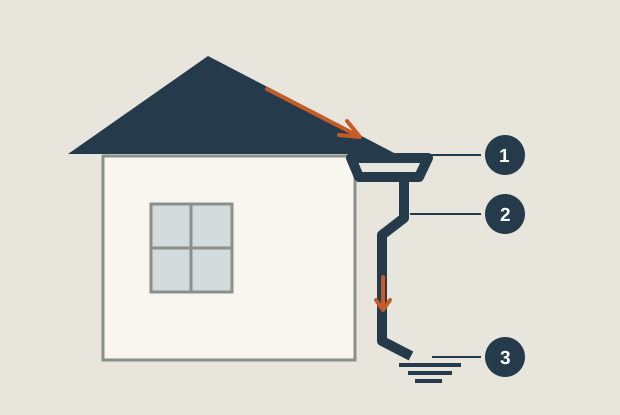
Keeping track of several independent runs
If the steps turn at a landing, photograph the turn from both directions. The wall beneath the gutter may be reachable from a different level from the door itself. Include any fixed rail or gate that limits access, and say whether another route reaches the lower ground without using the stairs.
At a building with more than one external landing, ask the person reporting the leak to photograph the number on the door nearest the first wet step. A picture of a railing can look identical on several levels. If there is a canopy over one landing, mark where it finishes and whether water runs onto the flight below it. These details help distinguish a drip at the upper entrance from another reported at the foot of the stairs.
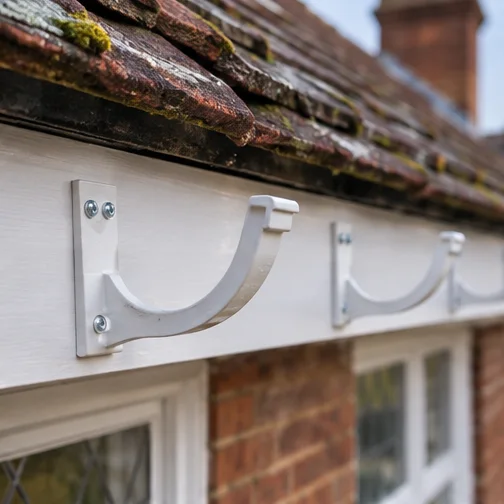
Compare indoor marks with the outside levels
If water appears near an internal stair or a doorway, give the level of the entrance and the height of the first wet mark. Identify the matching spot outside and show the pipe, canopy and nearest roof edge. A mark at the foot of a wall may coincide with water crossing a landing. A mark above an opening may sit below a roof junction. Record which surface gets wet first if you can observe it safely.
For a water damage repair enquiry, give the date and time of fresh wetting and share any earlier report on the gutter or outlet. If more than one home is affected, label the reports by door or floor. Keep the account of which gutter lengths were reached and any sections needing different access. This helps a managing agent or resident compare later reports without confusing two similar entrances.
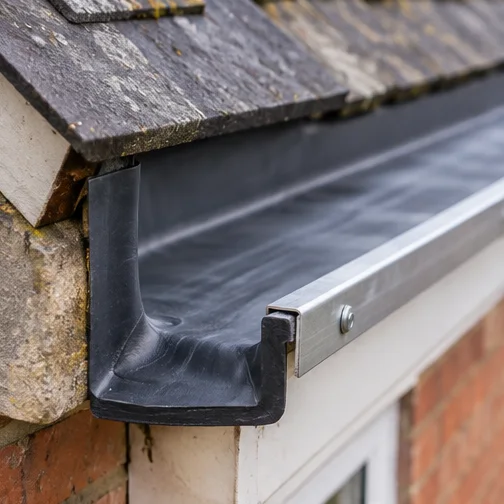
Roehampton gutter cleaning FAQs
Can you assess a gutter over a shared stair?
Yes. Send photographs of the gutter, the whole stair and the space at both ends. Tell us who uses the route and whether any alternative approach is available.
Can a caretaker meet you instead of the person booking?
Yes. Give the caretaker the agreed work and the marked photograph. Confirm they can open the relevant gates and show us the working area.
Can you clear a canopy gutter as well?
We can assess a reachable canopy and agree which lengths to cover. Show the roof above and tell us whether it also discharges onto the canopy.
What if the pipe goes behind the stair?
Photograph its visible sections and where they disappear. We can discuss the reachable openings. A concealed connection may need separate access or investigation.
What if the steps are wet after the rain ends?
Tell us how long water continues to fall and which area gets wet first. A daylight photo showing the roof, landing and nearest pipe can help locate the reported drip.
Can you also clear gutters on a house?
Yes, where suitable access is available. Send the postcode, pictures of the roof edges and details of any side or rear gate. We can identify the agreed house gutters before the visit.
Signs to record near an outdoor landing
| Observation | Useful evidence |
|---|---|
| Water drops across the top step | The highest point where it becomes visible |
| The underside of a canopy drips | What drains onto it and where its own channel discharges |
| A gully rises beside the stairs | The visible pipe ends and any surface runoff |
| An indoor mark appears near a doorway | Its height and the corresponding exterior level |
Coverage and bookings
See the areas we cover. For nearby enquiries, see Putney.