
Gutter Cleaning Upper Norwood
At a property on rising ground, the gutter visible from the road can be much further above the garden at the back. If rain falls beside a retaining wall or reaches a lower roof, it may be hard to see which outlet serves that part of the building. Glen’s provides gutter cleaning in Upper Norwood for accessible rainwater systems. Describe the first place you see water and the route to the ground below it. Include a wide view that shows how the roof and the plot change in level.
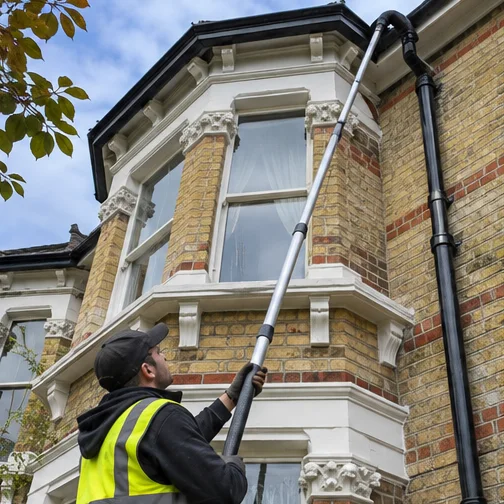
Illustrative photograph.
Distinguish the low roof from the upper outlet
A garage, porch or extension can have a short gutter of its own. If an upper pipe ends above that roof, runoff from the main house can cross the lower surface before it reaches its outlet. Record where you first see the water and whether it comes from the upper pipe, crosses the lower roof or spills over the gutter at the edge. A close photograph of the wet wall may miss the connection between the two roofs. A view that includes both levels gives a better reference for checking where water should go.
At a corner or return, a pipe can start on the side that is hidden by planting. If you can see the route safely, describe where it turns and where it reaches ground level. An exposed pipe might discharge above an open gully or enter paving. A wet patch near the base can also receive runoff from a sloping path. Note where water first moves into that area rather than assuming it came down the pipe. If the visible route ends at a concealed connection, share any drawing or maintenance record that identifies its path.
- Changes in height from street to garden
- Garage, porch and extension drainage
- Side paths around planting and retaining walls
- Records that name the exact roof section
Agree access around each elevation
A private drive may give a clear line to the front eaves while a side passage beside the house is too narrow at one point. A garden shared by several occupiers may need a named contact to open the gate. At a house divided into flats, confirm who agrees the work on the roof and who can provide access below. A resident who reports a drip from upstairs may be able to show its position even if they cannot admit the team to the garden. Explain what each person can provide when making the booking.
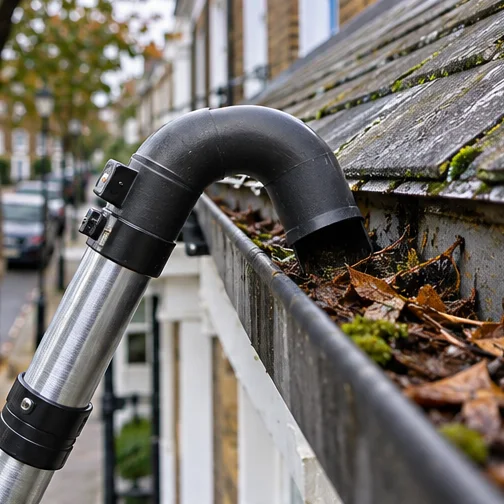
Gutter cleaning covers agreed accessible channels and visible openings. A ground-based vacuum may be practical where the ground, height and angle to the channel are suitable. A camera can sometimes show material beside an outlet or corner. A branch or lower roof may interrupt the line even if the gutter itself is visible. Where a channel sits behind a parapet or the only suitable position needs separate access, we can discuss that section. Any below-ground or enclosed route that cannot be observed may need another assessment.
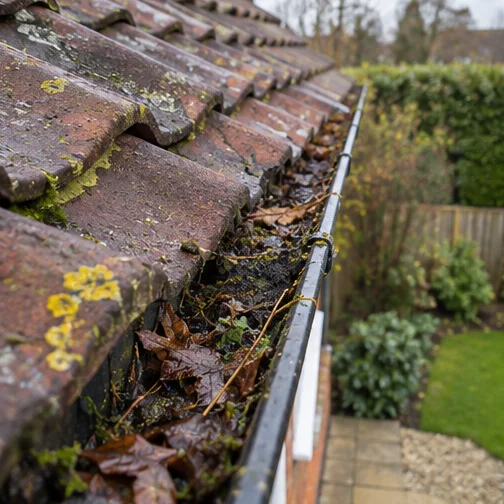
Show how the ground falls away from the house
Croydon’s Church Road conservation area appraisal maps the topography around Church Road, Beulah Hill and nearby roads in Upper Norwood. At a house in this area, a front path can start close to the main door level while the garden drops away behind it. Give the height from the side of the building where work is requested. If there are steps along the wall, describe which end is lower and where level ground is available. A photograph from the garden can show a retaining wall or raised terrace that is invisible from the road.
A property may have separate approaches for the front, side and garden elevations. A gate on a sloping drive can open onto a narrower path beside a garage, or the route may turn at a low wall. Tell us where the route starts, who opens it and what lies between the gate and the gutter. Branches, a canopy or an extension can change the line from the ground to the roof. Include them in the same image if possible. This helps establish where an agreed working position might be available.
Work for other parts of the rainwater system
Gutter cleaning
Clear agreed accessible channels and openings above lower terraces, garages and garden elevations.
Gutter replacement
Review renewal options where multiple lengths or brackets have deteriorated.
Gutter lining
Assess support and outlet geometry before considering lining.
Guttering repairs
Consider a visible local joint with the surrounding gutter, support and fixing surface.
Water damage repair
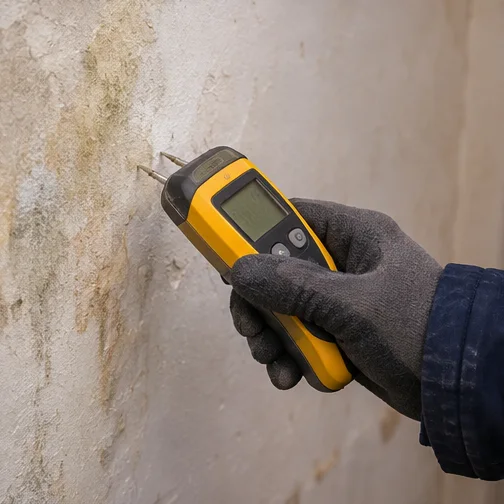
Compare dated indoor observations with visible exterior wetting before follow-up.
Ivy removal
Assess the route of stems behind pipes or beneath roof-edge details.
Upper Norwood observations for a gutter enquiry
| What you saw | Detail to add | What it helps establish |
|---|---|---|
| Overflow above a lower garden | Height from the affected side and nearest steps | Shows the working level below the gutter |
| Water crossing a garage or porch roof | Position of the upper pipe and lower outlet | Identifies how the two roof levels may connect |
| Wet paving near the foot of a pipe | Whether water reaches a gully or moves down the path | Locates the last visible part of the route |
| Drip at a fitting beside an extension | Position of the nearest support and earlier changes | Gives context for assessing the local defect |
Review defects that remain after clearance
Material can gather at the outlet and hold water against a seam further along the run. After accessible debris has been removed, a visible drip may still relate to a gap, low point or support that has moved. Guttering repairs can be assessed by looking at the affected piece alongside the surrounding gutter and fixing surface. If a previous alteration moved a pipe or added a connector between different profiles, give the position and share any relevant record. A photograph of the adjoining brackets can help locate the point to inspect.
A channel may be considered for gutter lining where the support, shape and outlet details allow a liner to be fitted. Replacement may warrant discussion where several lengths or fixings have deteriorated. If ivy crosses a support or enters a gap under the roof edge, describe the path of the stems and the surface beneath them. That information helps define the ivy removal assessment. Water damage repair begins with finding the route of entry and identifying the affected materials. Record when an inside mark first appears and the nearest feature outside so the two observations can be considered together.
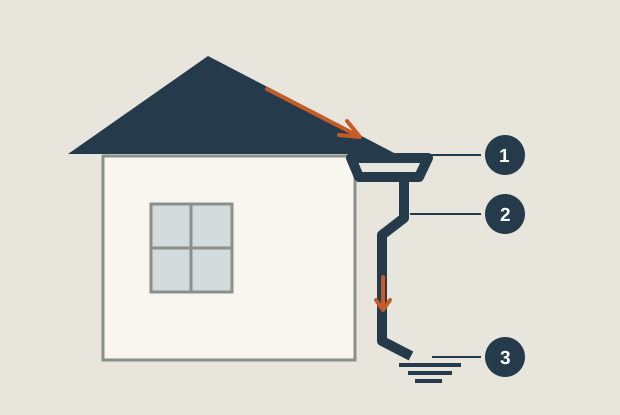
Keeping track of several independent runs
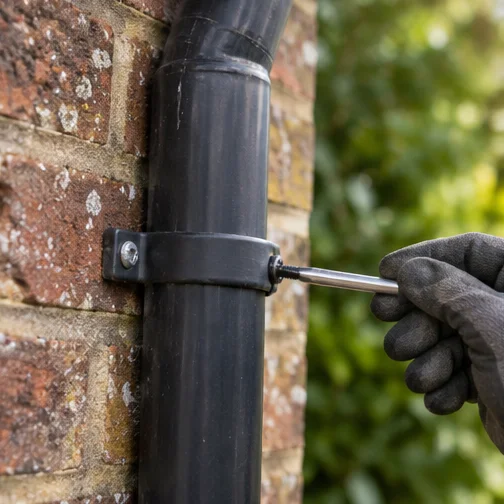
Name the position for future maintenance
A clearance record can identify which lengths and outlets were reached, where material collected and any visible point needing another look. Refer to a stable landmark such as the pipe above the lower terrace steps or the gutter over the garage window. At a property with several roof levels, the words front and rear alone may leave more than one possibility. The report can also identify any section that needs another approach and the person who can provide access. Confirm who should receive it.
After the next rain, look for the first wet point from a safe position. Note whether it starts in the same place and how long it takes to appear. If the original spill stops but a lower connection still drips, record both positions separately. If a mark appears indoors, give its date, the affected room and the nearest exterior feature. A dated photograph can distinguish earlier staining from fresh wetting. The person arranging follow-up can compare the observations with the clearance record before deciding whether to assess a visible fitting, concealed pipe or another part of the building.
Questions about gutter cleaning in Upper Norwood
Which height should I give when the ground drops away at the back?
Give the approximate height beneath the affected gutter and describe the level changes along the wall. A view of the garden, steps and eaves together can help establish the practical approach.
Can the upper gutter and a garage roof gutter both be cleared?
Yes, if both are included in the agreed work and reachable from suitable positions. Show how the two roofs meet and where their outlets sit. The garage roof can limit the angle to the upper channel.
What if I can only see the downpipe from the other side of a hedge?
Tell us where it becomes visible and which approach is agreed. A wide view showing the hedge, pipe and gutter gives useful context. Another route may be needed if the working position is obstructed.
Does a puddle below a retaining wall point to a gutter problem?
It can receive water from the roof system, the path or surrounding surfaces. Observe where water first moves from a safe position. A buried connection or concealed discharge may need separate assessment.
Should I send a photo of a previous connector replacement?
Yes, if it shows where the new piece meets the original gutter. Add a current view of the drip and nearest support. The two pictures can help identify whether the same area needs attention.
What if an indoor mark changes but the visible gutter looks dry?
Record the room, date and nearest outside wall or fitting. Share whether it changes after rain or during a dry spell. An inspection may need to consider other routes through the building.
Confirming access on a sloping plot
| Working area | Detail to confirm |
|---|---|
| Gutter above a lower terrace | Route down from the gate and position of level ground |
| Side path between a garage and wall | Narrowest width, steps and roof projection |
| Garden screened by planting | Location of branches and the nearest open position |
| Private garden beneath a shared roof | Who can admit the team and who authorises the work |
Coverage and bookings
See the areas we cover. For nearby enquiries, see Crystal Palace and West Norwood and South Norwood.